
Searsia engleri
Searsia engleri
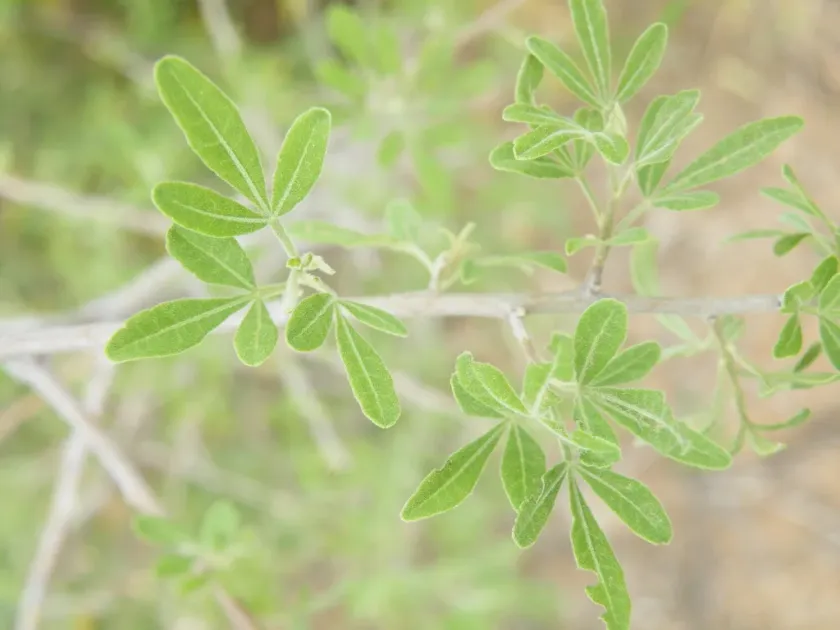
Description
Growing requirements
Searsia engleri is a perennial woody plant belonging to the Anacardiaceae family. It is native to the southern regions of Africa, where it has evolved to thrive in arid and semi-arid environments.
This species requires full sun exposure to maintain its growth density. In its natural habitat, it acts as a pioneer species that adapts well to open areas with high solar radiation.
Regarding soil requirements, Searsia engleri prefers well-drained, porous substrates. It is highly sensitive to waterlogged soil, which can lead to rapid root decay if not managed correctly.
The climate must be frost-free or have very mild winters. The plant is drought-tolerant once established, requiring deep, infrequent watering cycles to encourage deep root system development.
General maintenance includes annual trimming to remove damaged branches and to shape the canopy, which helps in managing the plant's spread and overall vigor.
Main diseases and pests
The plant is relatively resistant to major agricultural diseases, though it can be susceptible to fungal infections if planted in poorly drained conditions.
Typical pests include scale insects and various leaf-eating larvae that may appear during the humid seasons, though they rarely cause significant economic damage.
Monitoring for spider mites during extreme heatwaves is recommended, especially in young plants that have not yet established a strong protective bark layer.
To prevent potential infestations, standard integrated pest management practices should be followed, including maintaining good air circulation around the plants.
- Maintain spacing between individuals to prevent overcrowding.
- Regularly clear weeds around the root zone to reduce pest nesting sites.