
Nanaberry
Searsia dentata
Description
Growing requirements
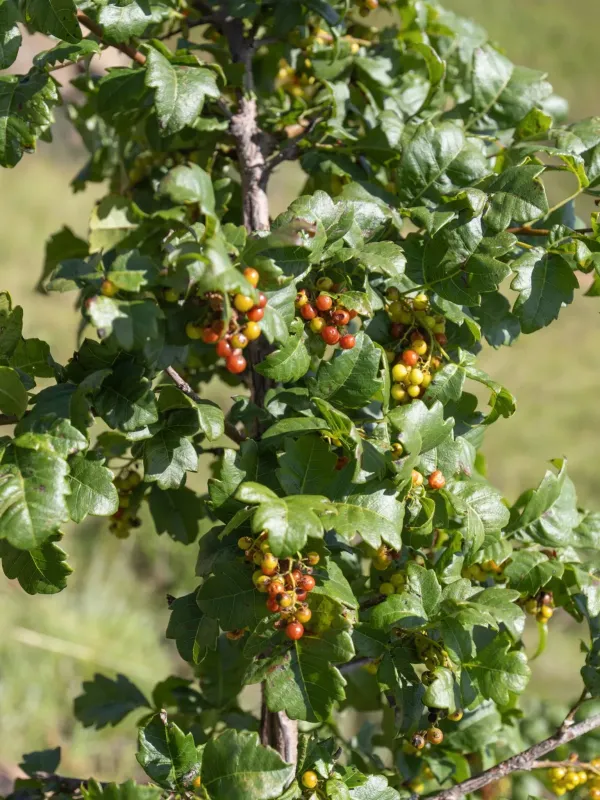
Searsia dentata, commonly known as the Nanaberry, belongs to the Anacardiaceae family. Native to South Africa, this woody shrub is highly valued for its resilience and ability to thrive in diverse ecological niches, ranging from rocky outcrops to open scrublands.
Botanically, the plant is distinguished by its trifoliate leaves with serrated margins, which can turn shades of red and brown in autumn. It typically reaches a moderate height, making it an ideal candidate for windbreaks or natural privacy screens in managed landscapes.
The cultivation of this species requires well-drained soil and exposure to full sunlight. It is exceptionally drought-tolerant once established, owing to its evolutionary adaptation to the erratic rainfall patterns of its native habitat, which minimizes the need for supplemental irrigation.
Regarding soil conditions, the plant is not highly demanding. It can tolerate acidic to neutral pH levels and is well-suited for soil stabilization projects due to its robust root system that helps prevent topsoil erosion in exposed areas.
Beyond its ornamental appeal, the Nanaberry is a vital component of local ecosystems. Its fruit provides a reliable food source for local bird species, while its dense foliage supports insect diversity, contributing to integrated pest management practices in agricultural peripheries.