
Common currant-rhus
Searsia pyroides
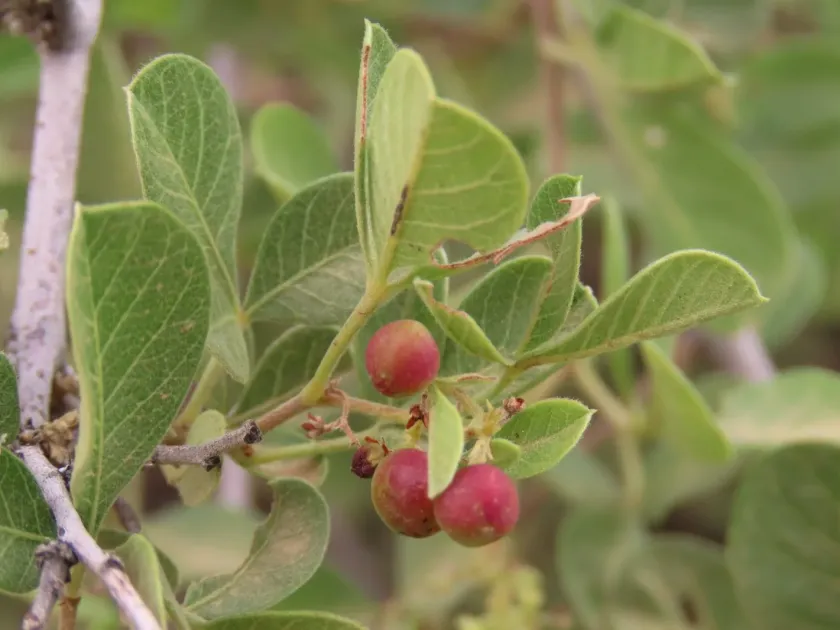
Description
Growing requirements
Searsia pyroides, commonly known as the common currant-rhus, is a hardy woody plant belonging to the Anacardiaceae family. Native to Southern Africa, this species is widely recognized for its ecological resilience and significant role in local biodiversity restoration programs.
The plant exhibits remarkable adaptability to a wide range of soil types, ranging from nutrient-poor rocky substrates to deeper loams. It thrives in regions with seasonal drought, utilizing its deep root system to access groundwater and maintain photosynthesis under arid conditions.
Regarding climate, Searsia pyroides is highly tolerant of full sun exposure and can withstand moderate frost during the dormant season. This makes it a versatile species for agroforestry initiatives, especially in areas where traditional tree species struggle to establish themselves due to extreme heat.
The agricultural and environmental utility of the species is primarily focused on erosion control and habitat creation. Its dense, often thorny canopy acts as an effective windbreak, protecting sensitive soil layers and providing essential shelter for beneficial fauna, including birds that feed on its small berries.
In terms of management, this crop requires minimal intervention once established. Pruning can be employed to shape the plant as a hedge or to promote more robust growth. It is an excellent choice for sustainable farming practices aiming to increase carbon sequestration and preserve soil health in dryland environments.