
White karee
Searsia pendulina
Description
Growing requirements
The White Karee (Searsia pendulina), formerly classified as Rhus pendulina, is an evergreen tree belonging to the Anacardiaceae family. Native to South Africa, it naturally thrives along riverbanks, showcasing its remarkable ability to tolerate both moist environments and significant dry spells.
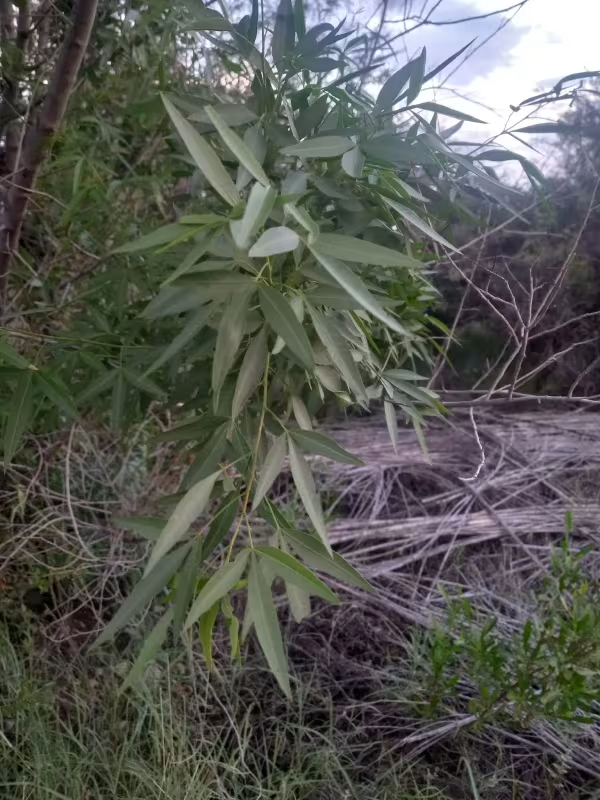
Botanically, the tree is prized for its graceful, weeping habit and slender, lanceolate leaves, which provide a delicate aesthetic appeal. Reaching heights of up to 8 meters, it is a fast-growing species that forms a dense canopy, making it an excellent choice for shade and screening purposes in horticulture.
Regarding its requirements, Searsia pendulina prefers sunny positions and thrives in well-drained soils. While it flourishes in nutrient-rich loams, it demonstrates superior adaptability to poor, rocky, or sandy substrates, which adds to its reputation as a low-maintenance agricultural and ornamental crop.
The species shows good tolerance to moderate frost, although young trees require protection during their first few seasons. Its inherent resilience to strong winds makes it a valuable asset for coastal plantings and slope stabilization, where other delicate tree species might fail to establish.
In terms of хозяйственное usage, the White Karee is widely utilized in urban reforestation, park design, and as a windbreak for agricultural fields. Its ability to thrive with minimal intervention makes it a sustainable choice for landscaping projects in arid and semi-arid climates.
Main diseases and pests
Searsia pendulina is generally characterized by its high resistance to common plant diseases. The most significant threat it faces is the development of root rot, which typically occurs in poorly drained soils where water stagnation persists, specifically in heavy clay environments.
Insect pests are rarely a major concern for established trees. However, in conditions of poor ventilation or high humidity, infestations of scale insects or mealybugs can occasionally occur. Management of these pests is best achieved through cultural practices, such as judicious pruning to improve airflow.
Fungal leaf spots can manifest during unusually wet seasons or if the tree is subjected to excessive overhead irrigation. Applying broad-spectrum fungicides is rarely necessary for mature specimens but can be used as a localized treatment for younger, more vulnerable plants in nursery settings.
Sustainable pest control focuses on monitoring and the application of horticultural oils, which are effective against most sap-sucking insects. This approach ensures that the tree's natural ecological benefits are maintained without disrupting the balance of beneficial insects in the surrounding area.
The primary key to tree health remains proactive agrotechnics. By providing optimal spacing to prevent crown density and ensuring proper irrigation management, the grower can mitigate most risks, allowing the tree to maintain its innate vigor and long-term aesthetic and ecological performance.