
Shining currant
Searsia lucida
Description
Growing requirements
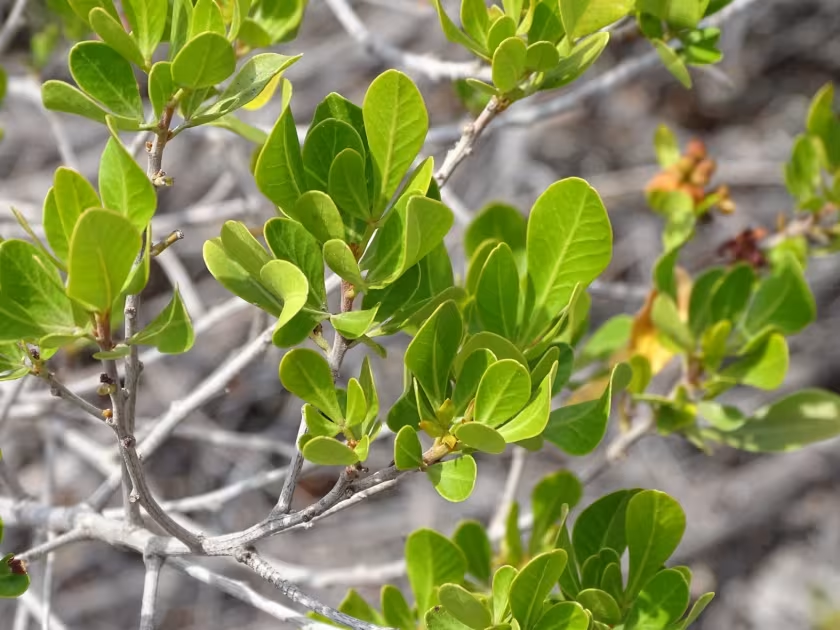
Searsia lucida, commonly known as the Shining currant, belongs to the Anacardiaceae family. It is a robust, evergreen shrub characterized by its leathery, trifoliate leaves that exhibit a distinct glossy sheen. This botanical trait makes it highly desirable for gardeners looking for durable, low-maintenance structural plants in their landscape designs.
Native to the coastal and mountainous regions of South Africa, this species is naturally adapted to withstand harsh conditions, including strong salt-laden winds and periods of drought. Its ability to thrive in diverse environments makes it a reliable choice for xeriscaping and coastal plantings where many other species would struggle to survive.
The cultural requirements are relatively straightforward, provided the soil is well-draining. Shining currant is intolerant of waterlogged conditions, which can lead to root rot. It thrives in full sun, though it is flexible enough to perform well in partial shade. Sandy or rocky soils are ideal, reflecting its natural habitat in the southern tip of Africa.
In terms of horticultural management, the plant benefits from structural pruning to maintain a dense, compact habit. It is an excellent candidate for formal hedging or topiary, as it responds vigorously to regular clipping. Fertilization is generally not required unless the shrub is grown in extremely poor soil, in which case a light application of compost can promote denser foliage growth.
Landscape architects utilize Searsia lucida for its dual benefits: aesthetic beauty and erosion control. Its strong, deep root system helps stabilize slopes, while its dense foliage provides a privacy screen. Furthermore, it attracts local pollinators, contributing to local biodiversity when integrated into sustainable gardening schemes.
Main diseases and pests
The primary threats to Searsia lucida are related to improper water management, specifically overwatering, which promotes fungal pathogens. Occasionally, scale insects or aphids may appear on tender new growth. To manage these, it is recommended to maintain good air circulation and utilize organic horticultural soaps if infestations occur.