
Searsia leptodictya
Searsia leptodictya
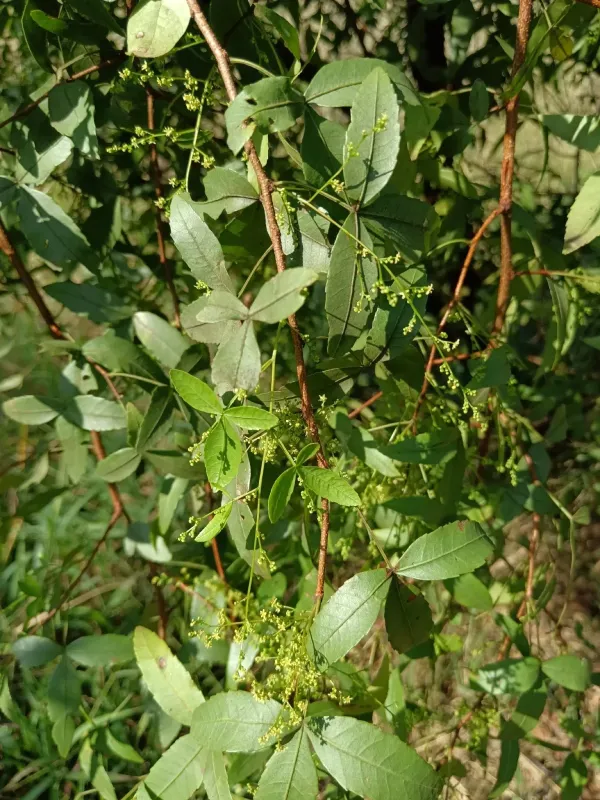
Description
Sowing dates
Propagation of Searsia leptodictya, commonly known as the Mountain Karee, is primarily achieved through seeds or semi-hardwood cuttings.
Seeds possess a tough seed coat, making mechanical or chemical scarification necessary to ensure uniform germination rates across the crop.
The ideal sowing window is during the spring season, providing the soil temperature remains consistently above 18 degrees Celsius for the seedlings.
Cuttings should be harvested in late summer and placed in a humid environment to promote root development before the onset of the dormant season.
Young plants require consistent monitoring during the first months post-transplant, though they rapidly become self-sufficient after establishment.
Growing requirements
As a member of the Anacardiaceae family, this species is native to the diverse landscapes of Southern Africa, thriving in sunny and open environments.
The plant is highly drought-tolerant and performs well in sandy, loamy, or rocky soil conditions where fertility levels are relatively low.
Proper drainage is the most critical factor for success, as waterlogged conditions often lead to rapid deterioration of the plant's root system.
While adapted to full sun, it can withstand partial shade, though growth rates may be lower than in optimal, high-intensity sunlight conditions.
Minimal fertilization is required, as the species is well-adapted to surviving in nutrient-poor substrates, making it an excellent candidate for low-maintenance areas.
Yield
The economic value of Searsia leptodictya is centered on its utility in landscape architecture, soil conservation, and its high ecological benefits.
Its wood is characterized by significant density and resilience, which is traditionally utilized in crafting tool handles and small furniture items.
The berries produced by the tree serve as a vital food source for avian species, promoting biodiversity in natural and urban reforestation projects.
As an ornamental plant, it serves as a fast-growing screen or hedge, capable of reaching significant heights while maintaining a dense, attractive canopy.
Due to its deep root structure, it is often employed in erosion control strategies on embankments and sloping landscapes to stabilize the terrain effectively.
Main diseases and pests
Searsia leptodictya is recognized for its robust health and significant natural resistance to standard horticultural pests and diseases.
The primary threat remains poor soil management, specifically regarding excess irrigation which encourages fungal pathogens in the root zone.
Occasional infestations of aphids may occur on tender shoots, but these are generally superficial and easily managed with organic control methods.
Maintaining adequate space between plants is essential to prevent micro-climates that could promote mildew or fungal spots in overly humid conditions.
- Ensure well-draining soil media
- Avoid over-watering young shrubs
- Implement annual pruning for structure
- Monitor for aphid presence in spring