
Searsia lancea
Searsia lancea
Description
Sowing dates
Sowing seeds of Searsia lancea is best performed in spring when soil temperatures reach 18–22 degrees Celsius. The seeds possess a hard coat, so mechanical scarification or soaking in warm water for 24 hours is essential to trigger germination.
Seedlings should be raised in a greenhouse environment using a well-draining, sandy loam mix. It is vital to maintain moderate moisture levels, as seedlings are sensitive to "damping off" diseases if the substrate remains saturated for too long.
Transplanting to the permanent site is recommended once the danger of frost has passed. Planting density should allow for significant lateral growth, typically spacing trees at 3 to 5 meters to ensure adequate airflow and light penetration across the canopy.
During the establishment phase, regular irrigation is required. As the plant matures and develops a deep taproot, it becomes increasingly drought-tolerant, eventually requiring very little supplemental water even in arid climates.
Vegetative propagation via semi-hardwood cuttings is a reliable way to maintain the desirable traits of specific cultivars. Using rooting hormones and a misting system significantly increases the success rate of this method.
Growing requirements
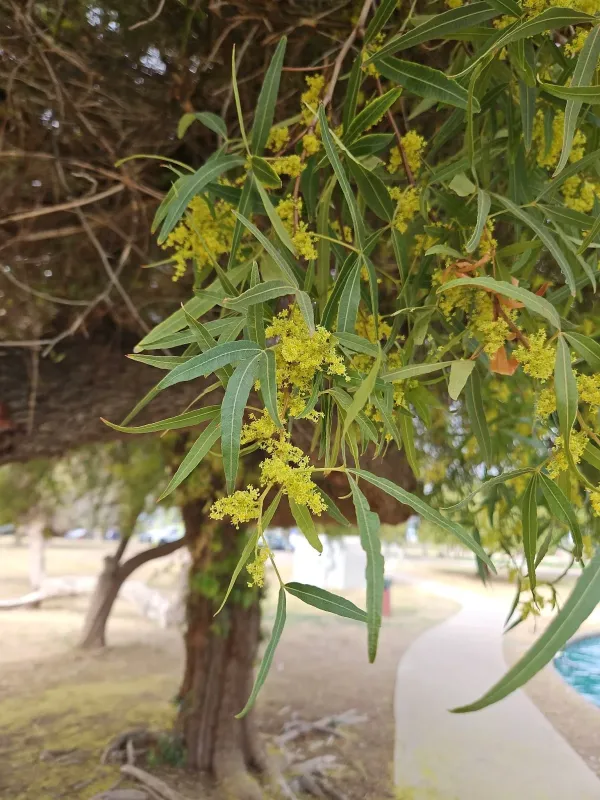
Searsia lancea, commonly known as the Karee tree, is an evergreen member of the Anacardiaceae family native to Southern Africa. It is highly valued for its ability to thrive in diverse and challenging environmental conditions.
The tree prefers full sun to light shade and is remarkably adaptable to various soil types. It flourishes in rocky, clay, or sandy soils as long as they are well-drained, making it a versatile choice for landscape restoration projects.
Searsia lancea is extremely drought-tolerant once established, making it suitable for xeriscaping. It can also withstand moderate levels of soil salinity, allowing for successful growth in coastal regions where other plants might struggle.
While the tree is hardy and can withstand light frosts down to -5 degrees Celsius, it performs best in subtropical climates. Protection from severe, prolonged freezes is recommended for young trees to ensure long-term health and structural integrity.
Its wind resistance makes it an excellent choice for windbreaks and shelterbelts in agricultural settings. The dense, willow-like foliage provides year-round screening and habitat for local wildlife.
Yield
Economically, Searsia lancea is prized for its high-quality, dense, and durable wood. The timber, which often features an attractive grain, is sought after for fine furniture making, tool handles, and unique wood-carving projects.
The fruit, produced in large quantities, consists of small, tart drupes. While primary human consumption is limited, they are a vital food source for birds and small mammals, contributing significantly to local biodiversity.
The tree serves an essential role in ecological services, particularly in soil stabilization. Its deep root system prevents erosion on slopes, while its capacity for carbon sequestration helps mitigate the effects of environmental degradation.
In urban forestry, it is a top choice for shade provision due to its rounded canopy. This shade significantly reduces local ambient temperatures in urban heat islands, improving microclimates around residential and commercial buildings.
The biomass generated from periodic pruning can be used as organic mulch or compost, enriching the soil with essential nutrients and improving its structure for other associated crops.
Main diseases and pests
The primary threats to Searsia lancea are root rot diseases, typically induced by poor drainage or overwatering. Maintaining a well-aerated soil environment is the best preventative measure against these fungal issues.
Pests such as aphids and spider mites may occasionally infest new growth, especially during periods of high humidity. Integrated pest management, including the use of neem oil or predatory insects, is effective in controlling these populations.
Wood-boring insects can become a concern if the tree is already stressed due to drought, physical injury, or nutrient deficiency. Keeping the tree in a vigorous state of health is the best defense against these pests.
Good cultural practices, such as regular sanitation by removing dead or diseased wood, help prevent the spread of pathogens. Proper spacing also ensures that the canopy remains dry after rain, reducing the risk of fungal proliferation.
- Ensure excellent drainage in the planting hole.
- Monitor for early signs of leaf discoloration.
- Provide adequate spacing to prevent canopy overcrowding.
- Avoid wounding the trunk during soil cultivation.