
Searsia laevigata
Searsia laevigata
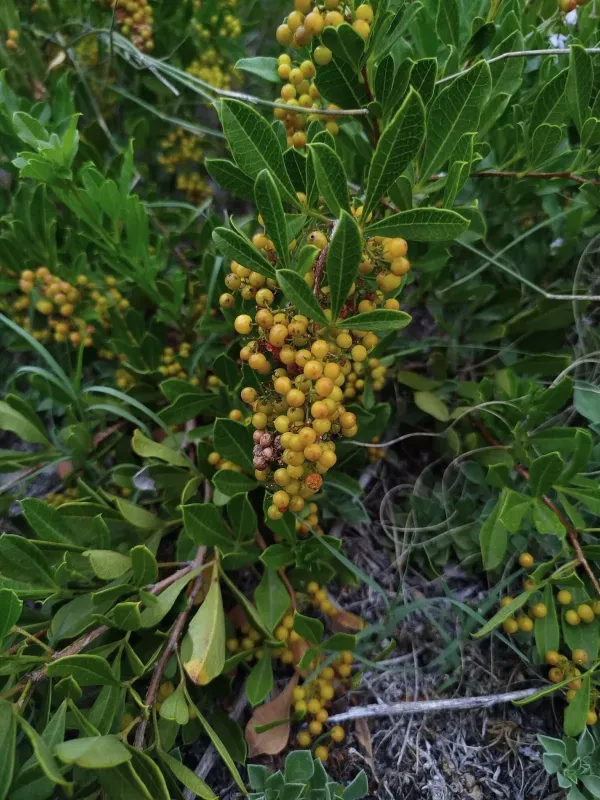
Description
Growing requirements
Searsia laevigata, commonly known as the dune currant, is an evergreen shrub or small tree belonging to the Anacardiaceae family. Native to the coastal regions of Southern Africa, it is widely recognized for its robust growth habit and ability to thrive in harsh environments.
This species is highly adaptable to various soil types, preferring well-drained, sandy, or rocky substrates. It is particularly valued for its tolerance to saline conditions and heavy coastal winds, making it an excellent candidate for maritime landscape stabilization.
Optimal growth is achieved in full sun, where the plant develops a dense, rounded crown. While it can survive in partial shade, such conditions may result in a sparser appearance and reduced flowering, which is typical for many members of the Searsia genus.
Climate requirements include mild winters and warm, dry summers. It exhibits moderate frost tolerance, but it is not suitable for regions experiencing severe, prolonged winter freezes. It is well-suited for Mediterranean-style climates where water conservation is prioritized.
Agrotechnical maintenance is minimal once the plant is established. Supplemental irrigation is only necessary during extended drought periods in the first few years of growth. Pruning is essentially limited to shaping and removing deadwood to maintain a clean appearance.
Harvesting
In landscaping, Searsia laevigata serves as a functional and aesthetic element, often used for windbreaks, screen planting, or hedging. Its evergreen foliage provides a permanent green barrier, maintaining its visual appeal throughout the changing seasons.
The fruits produced by the shrub are small, berry-like drupes. While not typically harvested for human consumption, they are highly attractive to birds, contributing significantly to local biodiversity by providing food and nesting material in suburban and rural gardens.
The plant's wood is hard and durable, historically utilized for small-scale carpentry and tool handles in its native range. Today, the focus remains on its ecological value and its capacity to act as a resilient anchor for soil in dune rehabilitation projects.
Propagation is typically achieved through seeds or semi-hardwood cuttings. Seeds should be sown in a well-draining medium in early spring. Cuttings benefit from the application of rooting hormone and should be kept in a humid, shaded environment until successfully rooted.
Given its minimal requirements for fertilizers and pesticides, it is considered a low-maintenance plant. Monitoring for pests such as scale insects or aphids is recommended, although severe infestations are rare in properly sited and healthy specimens.