
Schwerin's Willow
Salix schwerinii E.L. Wolf x S. viminalis L
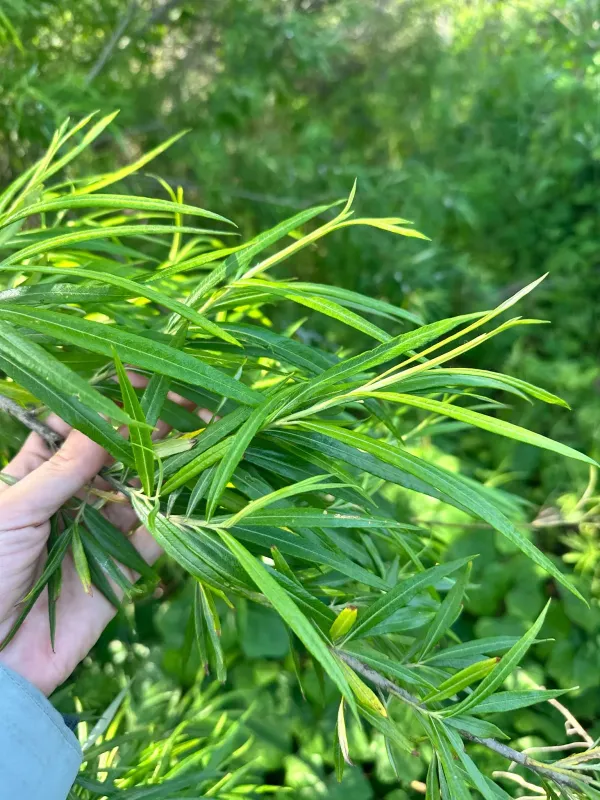
Description
Sowing dates
Planting of Schwerin's willow is typically carried out in early spring, as soon as the soil thaws and becomes workable, or in late autumn during dormancy.
Hardwood cuttings ranging from 20 to 25 centimeters in length, taken from healthy annual shoots of parent plants, are used as planting material.
Cuttings are inserted into prepared soil, burying them so that only one or two buds remain above the surface to stimulate future growth.
Optimal planting density depends on the purpose of cultivation: for biomass production, it ranges from 15,000 to 20,000 cuttings per hectare.
Ensuring tight contact between the cutting and the soil is crucial to prevent desiccation of the lower portion and to facilitate root formation.
Growing requirements
Schwerin's willow belongs to the Salicaceae family and is valued for its high adaptability to moist growing conditions and various soil types.
The crop prefers well-lit areas, although it can tolerate partial shade, but growth rates and biomass accumulation decrease with limited light.
The ideal environment consists of fertile, loamy, or sandy soils with a high water table, provided there is no prolonged waterlogging.
It is cold-hardy, which allows for successful cultivation in regions characterized by moderate to harsh northern climates.
The plant responds positively to organic and mineral fertilization, especially during the first years of growth, which is essential for bush development.
Yield
The yield of Schwerin's willow depends directly on management quality and planting density, achieving significant results by the second or third year.
Under intensive cultivation for energy biomass, the annual growth of above-ground parts contributes to significant volumes of wood production.
Average productivity metrics allow for harvesting between 10 and 15 tons of dry matter per hectare under optimal agronomic conditions.
Productivity potential is maintained for 15–20 years, after which plantation renewal is recommended due to natural root system aging.
Utilizing modern hybrid selections significantly improves commercial yield compared to wild-type willow species.
Main diseases and pests
The most common pests affecting willow include willow leaf beetles and various types of weevils that feed on the leaf blades.
Fungal diseases, such as rust and various leaf spots, can affect the plant during periods of high humidity and poor air circulation.
To control diseases, it is recommended to perform sanitary pruning and apply fungicides upon the first signs of infection.
Regular monitoring of plantations helps to detect pest outbreaks early and implement necessary control measures effectively.
- Crop rotation management.
- Selection of resistant varieties.
- Removal of plant debris.
Harvesting
Harvesting is performed during winter or early spring when the plant is in deep dormancy and sap flow has ceased.
Shoots are cut using specialized machinery that allows for either shredding the material or bundling it into sheaves for transport.
To achieve maximum biomass quality, the cuts are made a few centimeters above the ground to ensure high-quality subsequent regrowth.
After the harvest, clearing the field of debris is essential if the plantation cycle is being concluded.
The collected biomass is typically processed into fuel pellets or used as high-quality material for basketry and weaving crafts.