
Pedicellate willow
Salix pedicellata Desf.
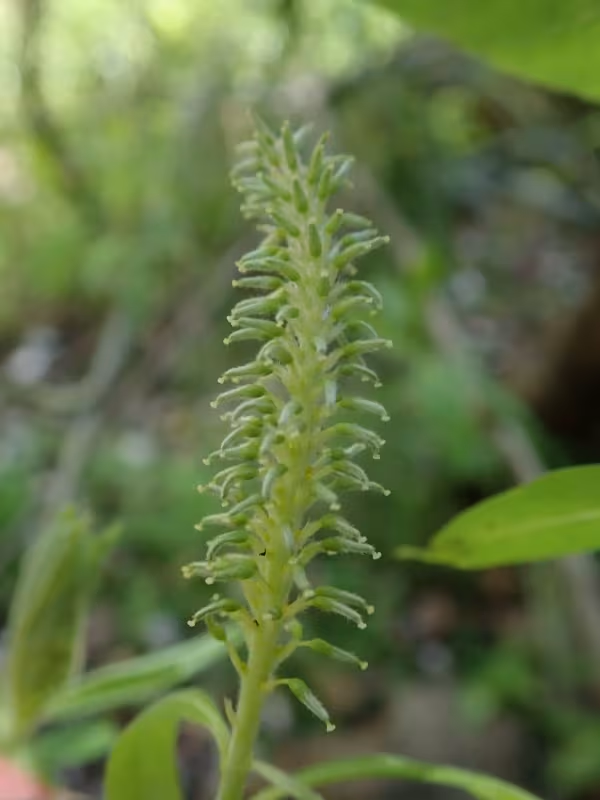
Description
Growing requirements
The pedicellate willow (Salix pedicellata) is a woody plant belonging to the Salicaceae family, native to the Mediterranean region and North Africa. It typically grows as a dense shrub or a small tree, well-adapted to warm climates.
This species is highly dependent on sufficient water availability, naturally thriving in riparian habitats such as riverbanks and marshy areas. It requires full sunlight exposure to maintain its structural integrity and leaf density throughout the growing season.
Soil requirements for the species include well-aerated but moisture-retentive substrates. While it tolerates various soil types, it performs best in neutral to slightly alkaline pH soils that are rich in organic matter.
Botanically, the plant is identified by its pedicellate catkins and elliptical leaves. The stems often display fine pubescence during early growth stages, serving as an adaptive trait to mitigate transpirational water loss in its native range.
Agricultural and landscape use includes soil erosion control near water bodies, windbreak implementation in coastal or arid zones, and use as an ornamental specimen in botanical gardens or private landscapes.
Main diseases and pests
The pedicellate willow faces significant pressure from fungal pathogens, primarily willow rust (Melampsora spp.), which thrives in high humidity environments and can cause severe premature defoliation if left untreated.
Black canker and shoot blight are also major concerns for this species, often manifesting after periods of heavy rainfall, requiring targeted fungicide applications to protect the vascular system of the branches.
Pest populations, particularly leaf beetles and aphids, frequently target the succulent foliage. Large infestations can result in stunted growth and increased susceptibility to secondary opportunistic infections.
Insects such as stem borers represent a long-term threat to the structural health of the shrub, as they tunnel through the wood, compromising the transport of water and nutrients from the root system.
Effective management strategies incorporate Integrated Pest Management (IPM) practices, including pruning to improve airflow, monitoring for early signs of infection, and applying chemical control measures only when thresholds are exceeded.