
Dappled willow
Salix integra Thunb.
Description
Growing requirements
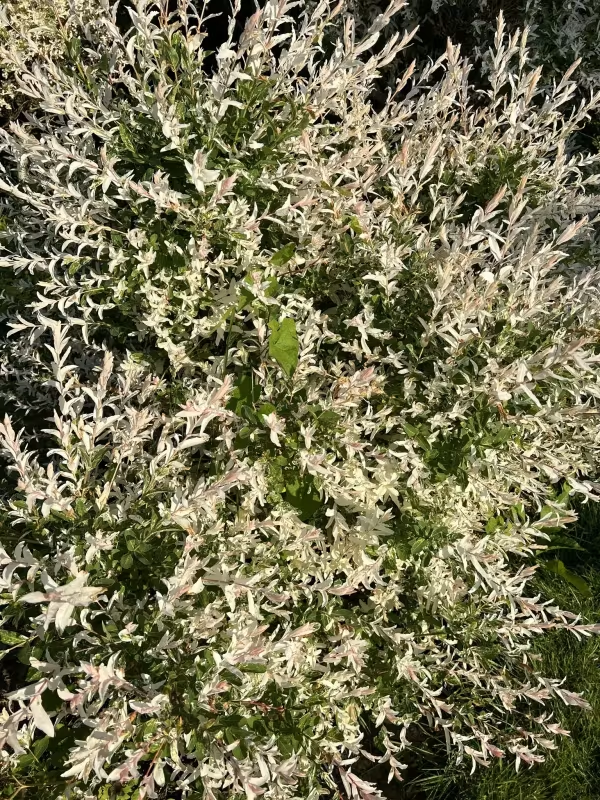
Salix integra, commonly known as dappled willow, is a deciduous shrub in the Salicaceae family. Originating from East Asia, including Japan, Korea, and Manchuria, it is widely appreciated for its variegated foliage.
The plant thrives in full sun to partial shade. In intense heat, afternoon shade is recommended to prevent leaf scorch, especially in regions with high solar radiation and low atmospheric humidity.
It prefers consistently moist, fertile, and well-drained soils. While it tolerates a wide range of soil pH, it performs best in soils with high organic matter content, which helps retain moisture during dry spells.
Climate adaptation is a key factor; although it is hardy, young specimens require winter protection in colder zones. Irrigation management is critical, as the plant suffers quickly from drought stress.
Regular maintenance includes formative pruning in early spring to encourage dense growth and maintain the vibrant pink-white variegation on the tips of the new shoots.
Main diseases and pests
Dappled willow is susceptible to several fungal diseases, such as leaf spot and anthracnose, which are favored by high humidity and poor air circulation within the shrub canopy.
Common pests include aphids, scale insects, and willow leaf beetles. These insects can cause significant cosmetic damage to the foliage and weaken the plant if left untreated.
Integrated pest management (IPM) practices, including regular monitoring and the use of insecticidal soaps or horticultural oils, are effective for controlling mild infestations.
To prevent disease spread, it is essential to collect and dispose of fallen leaves at the end of the season, as these often harbor overwintering fungal spores.
Ensuring that the shrub is not planted too densely allows for better ventilation, which acts as a primary cultural control method against most common pathogenic threats.