
Arctic willow
Salix arctica Pall.
Description
Growing requirements
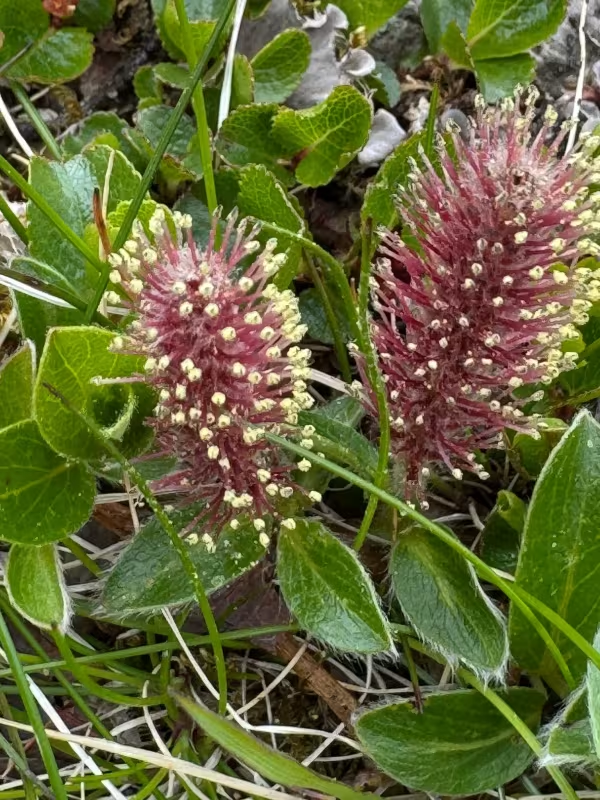
Arctic willow (Salix arctica) is a hardy dwarf shrub belonging to the Salicaceae family. It is renowned for its prostrate growth habit, which allows it to hug the ground closely, typically rising no more than 15 centimeters, effectively escaping the harsh, abrasive arctic winds.
The species is indigenous to the northern hemisphere, inhabiting vast areas across the Arctic tundra, North America, and Eurasia. It is perfectly adapted to the permafrost environment, where it survives by utilizing a short, intense growing season to complete its reproductive cycle.
Optimal growth conditions for this plant include well-drained, nutrient-poor soils that are typical of arctic and alpine regions. It thrives in open, sun-drenched locations, as it is highly shade-intolerant and requires maximum exposure to solar radiation to support its metabolic processes.
Botanically, the plant features small, thick leaves with a protective waxy cuticle to minimize transpiration. Its root system is exceptionally robust, allowing it to anchor securely in rocky substrates and draw moisture from limited sources during the ephemeral arctic summer.
The economic and ecological utility of Salix arctica is focused on land stabilization. It acts as a primary colonizer in harsh environments, effectively controlling erosion and providing critical winter forage for arctic herbivores like muskoxen and reindeer.
Main diseases and pests
The primary threats to the Arctic willow include the warming of the tundra climate, which facilitates the encroachment of taller, faster-growing shrub species that outcompete it for light. Fungal pathogens, such as leaf rust, also pose risks in areas with increased seasonal humidity.
Pests are generally less significant in the arctic, but in specific microclimates, willow-feeding beetles and aphids can cause damage to leaf tissue. Furthermore, overgrazing by local fauna in fragile ecosystems can lead to stunted growth and physical destruction of the plant mats.