
Humboldt's willow
Salix humboldtiana Willd.
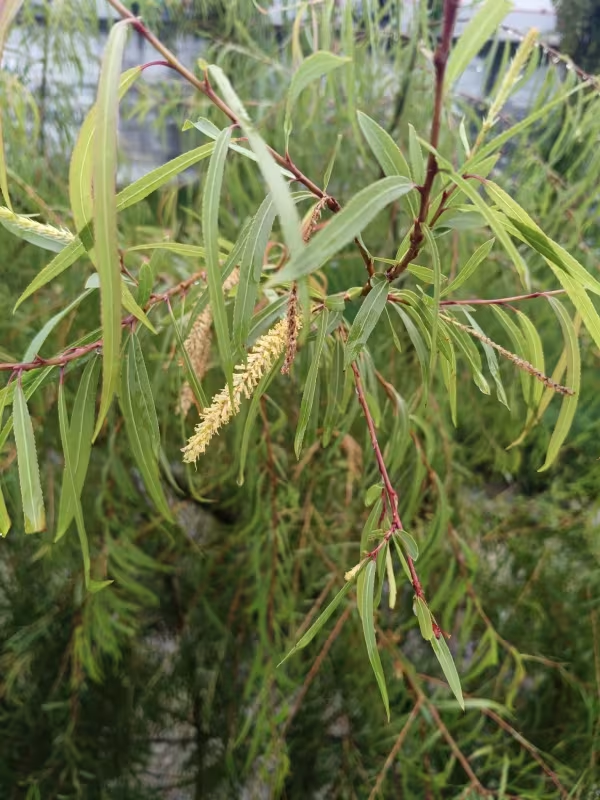
Description
Growing requirements
Humboldt's willow (Salix humboldtiana) is a species of deciduous tree belonging to the family Salicaceae, native to the tropical and subtropical regions of the Americas.
It is a fast-growing species that thrives in environments with high water availability, commonly found along riverbanks and riparian habitats.
The tree requires significant sunlight to reach its full growth potential and prefers climates that avoid prolonged freezing temperatures.
Optimal soil conditions for this species are deep, alluvial, and nutrient-rich soils that maintain high moisture content throughout the growing season.
Cultivation requires careful site selection where water tables are near the surface, or supplemental irrigation must be provided to sustain rapid development.
Yield
Humboldt's willow is primarily used for wood production, serving as a source for pulp, paper, and lightweight construction timber in local markets.
Due to its rapid biomass accumulation, it is frequently studied as a potential energy crop for sustainable biofuel production in tropical regions.
The tree plays a vital ecological role in erosion control, as its extensive root system effectively stabilizes riverbanks and prevents soil degradation.
Industrial applications include the production of charcoal and various wooden household items, benefitting from the wood's workability.
As a managed crop, it allows for coppicing cycles, which maximizes the sustainable annual yield of wood fiber over extended periods.
Main diseases and pests
The most prevalent diseases include various fungal pathogens such as leaf rust and powdery mildew, which flourish under high-humidity conditions.
Insect pests including willow beetles and leaf-miners pose a significant threat to young plantations by damaging foliage and hindering photosynthesis.
Managing these threats involves integrated pest management (IPM) strategies, including the use of targeted fungicides and careful monitoring of tree health.
Sanitary pruning is essential to remove infected branches and reduce the inoculum potential of fungal pathogens within the plantation.
Maintaining optimal spacing between trees is crucial to improve air circulation within the canopy, effectively reducing the incidence of fungal outbreaks.