
Riccia sorocarpa
Riccia sorocarpa
Description
Growing requirements
Riccia sorocarpa is a small species of liverwort belonging to the family Ricciaceae. Unlike major agricultural crops, it is a non-vascular plant that inhabits open, damp soil surfaces, often appearing in cultivated fields, gardens, and along footpaths where competition from larger plants is low.
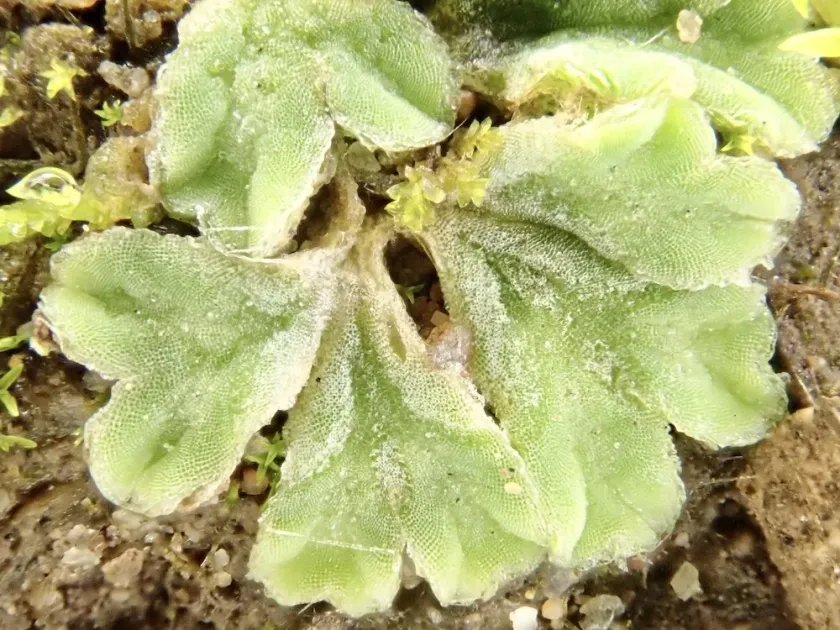
The plant body consists of a thallus that forms distinct, bright green rosettes. A key botanical feature is the deep central groove running along the upper surface of the thallus branches, which gives the plant a characteristic appearance, especially when the soil begins to dry out.
Optimal environmental conditions for Riccia sorocarpa include neutral to slightly acidic soils with sufficient moisture levels. It requires open sites where sunlight can reach the soil surface, as it is highly sensitive to shading by taller vegetation like grasses or crop plants.
The distribution of this species is cosmopolitan, found across various climatic zones including North America, Europe, and parts of Asia and Africa. It demonstrates significant adaptability to different environments provided the specific needs for moisture and exposed substrate are met.
In agricultural contexts, the presence of this liverwort serves as a bioindicator. It suggests the presence of moist, fine-textured soils and areas that have been disturbed, which allows for the initial establishment of moss colonies in the absence of more aggressive plant competitors.
Main diseases and pests
Major threats to this species include the intensive application of herbicides and systemic pesticides, which are toxic to non-vascular plants. These chemical inputs typically eradicate liverwort populations in agricultural fields shortly after application.
Deep mechanical cultivation and excessive soil compaction also destroy the habitat required for Riccia sorocarpa. The constant turnover of the topsoil prevents the stable development of the thalli and interferes with the germination and dispersal cycles of its spores.