
Riccia canaliculata
Riccia canaliculata
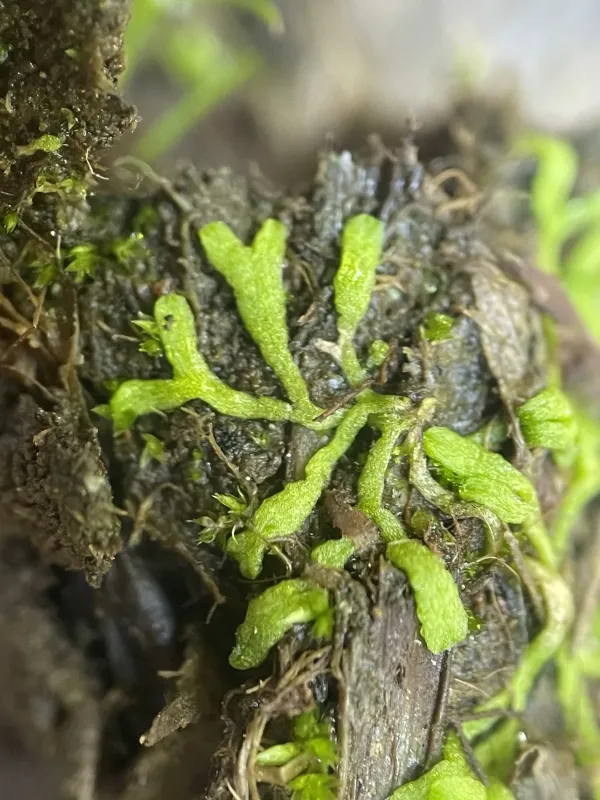
Description
Growing requirements
Riccia canaliculata is a specialized species of liverwort belonging to the Ricciaceae family. Recognized for its distinct channelled thallus structure, this bryophyte exhibits a unique ability to thrive in both amphibious environments and fully submerged aquatic setups, making it a subject of interest for both biology and ornamental aquaculture.
The plant originates from wetland habitats and moist soil interfaces near freshwater bodies. Its morphology is characterized by branched, flattened thalli that form dense, lush mats under optimal light conditions, which serve as essential micro-habitats in natural ecosystems.
Successful cultivation requires a stable aquatic environment with consistent lighting. Moderate to high-intensity light is crucial for maximizing photosynthetic activity and promoting rapid biomass accumulation, with an ideal temperature range of 18–26°C.
The plant demonstrates specific nutrient requirements, primarily favoring water enriched with carbon dioxide and balanced trace minerals. In hydroponic or aquarium systems, the presence of dissolved nitrogen compounds supports vigorous growth, provided the water remains clear and free of suspended debris.
In terms of economic and practical use, Riccia canaliculata is highly valued as a natural spawning medium for various fish species and as a protective nursery for fry. Furthermore, it acts as an effective bio-absorbent, mitigating nitrate and phosphate excess in enclosed water systems.
Main diseases and pests
The most significant threat to the health of the culture is the encroachment of filamentous algae. These organisms compete aggressively for nutrients and space, often overshadowing the liverwort and inhibiting its light intake, eventually leading to decline.
Invertebrate pests, such as certain species of freshwater snails, pose a consistent risk by grazing on the soft, delicate tissues of the thallus, causing physical damage that renders the plant susceptible to opportunistic fungal attacks.
Environmental instability, particularly drastic changes in pH levels or sudden temperature spikes, can induce severe physiological stress, resulting in the rapid degradation of the thallus structure and loss of pigmentation.
Excessive organic sedimentation is another major concern. When detritus settles onto the mats, it prevents adequate water circulation, facilitating the onset of bacterial rot and creating toxic anaerobic pockets within the culture.
Low CO2 availability in the water column is detrimental, causing the plant to lose its characteristic morphology, become increasingly fragile, and eventually cease growth, which limits its density in high-yield cultivation scenarios.