
Riccia beyrichiana
Riccia beyrichiana
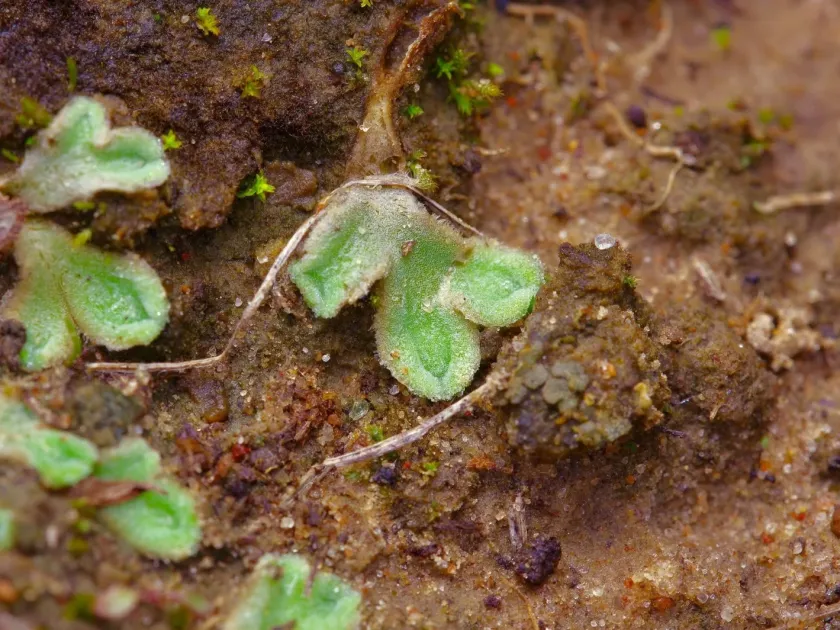
Description
Growing requirements
Riccia beyrichiana is a liverwort species belonging to the family Ricciaceae. While it is not a crop in the traditional agricultural sense, it holds scientific interest within the study of bryophytes and forest ecology due to its specific survival strategies.
The plant originates from diverse temperate and subtropical environments in the Northern Hemisphere. It thrives in habitats characterized by damp, exposed soil, often colonizing disturbed sites where competition from vascular plants is relatively low.
The morphology of this plant consists of a thallus, which grows in a characteristic rosette pattern. These structures are simple and lack specialized vascular tissues, meaning the plant relies entirely on its surroundings for hydration and nutrient uptake through its thallus and rhizoids.
Optimal growth conditions for Riccia beyrichiana involve high ambient humidity and consistently moist, well-draining soil. It generally prefers neutral to slightly acidic pH levels and requires moderate light to perform photosynthesis efficiently.
When maintained in controlled conditions, such as research laboratories, it is crucial to ensure clean irrigation water and adequate airflow. The plant is extremely sensitive to water quality, and mineral salts in hard water can accumulate on the surface and inhibit growth.
Main diseases and pests
The primary threat to Riccia beyrichiana is environmental degradation. Habitat loss, such as soil compaction or changes in drainage patterns, can render a site unsuitable for the species within a very short period of time.
Competition is another major limiting factor. In environments where tall grasses or shrubs establish themselves, Riccia beyrichiana is quickly outcompeted for resources, particularly sunlight, due to its low-profile, slow-growing nature.
Fungal pathogens and excessive moisture stagnation are persistent threats in confined settings. Without proper ventilation, opportunistic molds can quickly spread across the delicate thallus, causing rot and subsequent decay of the colony.
The species is highly susceptible to chemical contamination. Herbicides, pesticides, and industrial pollutants in surface water runoff can be toxic to these sensitive plants, making them effective bioindicators for environmental health.
Physical disturbances, including trampling by wildlife or livestock, can destroy delicate colonies. Recovery from physical damage is slow, as the plant lacks rapid regenerative tissues compared to larger, more resilient plant species.