
Riccia cavernosa
Riccia cavernosa
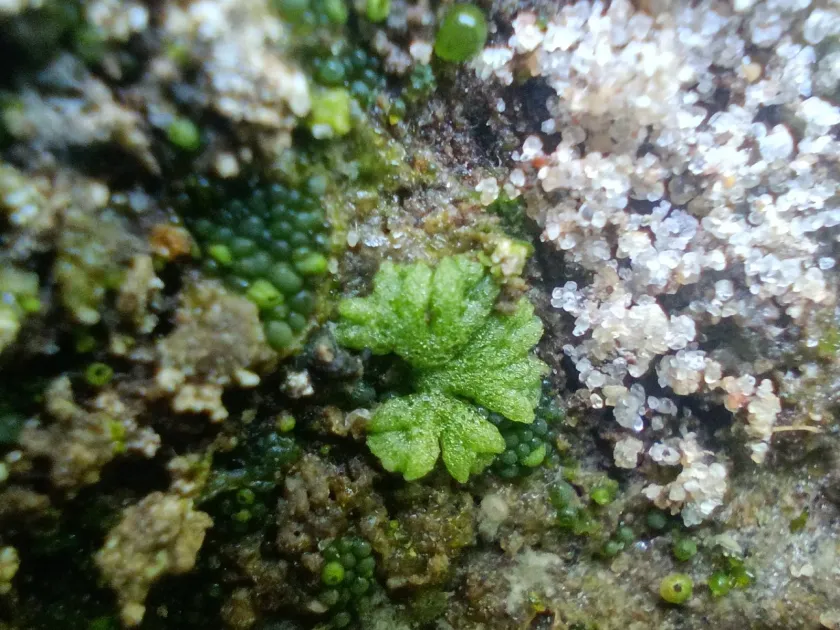
Description
Sowing dates
Riccia cavernosa is not a standard agricultural crop but a significant liverwort species found in aquatic and semi-aquatic ecosystems. Its propagation occurs via spores carried by water currents or wind.
In its natural habitat, germination takes place on moist soil exposed after receding water levels. The spores land on mud or silt and quickly develop into a characteristic rosette-shaped thallus.
For scientific or research purposes, propagation is achieved through thallus fragmentation. Fragments are kept on a damp substrate with high humidity to encourage healthy regeneration.
Optimal development requires open, sunlight-exposed areas. The plant lacks the competitive ability to grow under dense canopy or thick vegetation, which makes site selection crucial.
Growth is seasonal and closely tied to the drying cycles of temporary wetlands. These fluctuations are essential for the plant to complete its life cycle and produce new spores.
Growing requirements
Belonging to the Ricciaceae family, Riccia cavernosa is a cosmopolitan species. It has a broad geographical range, appearing across various continents in suitable habitats.
The plant thrives in damp, nutrient-rich, but not waterlogged substrates. Typical environments include mudflats, riverbanks, and temporary irrigation ditches where moisture levels remain stable.
Soil quality is generally less important than hydration. However, silty and sandy clays are favored as they provide the necessary structure to retain moisture during the plant's active phase.
High light intensity is required for efficient photosynthesis. The species is highly sensitive to light competition and will perish if covered by taller, faster-growing vascular plants.
Temperature requirements are moderate to warm. The plant is adapted to respond rapidly to seasonal changes, entering dormant stages when environmental conditions become unfavorable.
Main diseases and pests
The primary threat to the species is habitat degradation through the invasion of vascular vegetation. Shading caused by dense growth prevents the moss from performing photosynthesis.
Agricultural activities involving heavy herbicide use significantly impact populations. As a bryophyte, Riccia cavernosa is extremely sensitive to chemical toxicity in its environment.
Alterations in local hydrology, such as permanent flooding or total drainage of wetlands, destroy the ecological niche necessary for the survival of the species.
Pathogenic fungi can become a threat in conditions of excessive humidity coupled with poor air circulation, causing the tissues of the thallus to rot.
While not heavily targeted by traditional pests, the plant is vulnerable to environmental changes that reduce the availability of its preferred moist, open-soil habitats.