
Riccia glauca
Riccia glauca
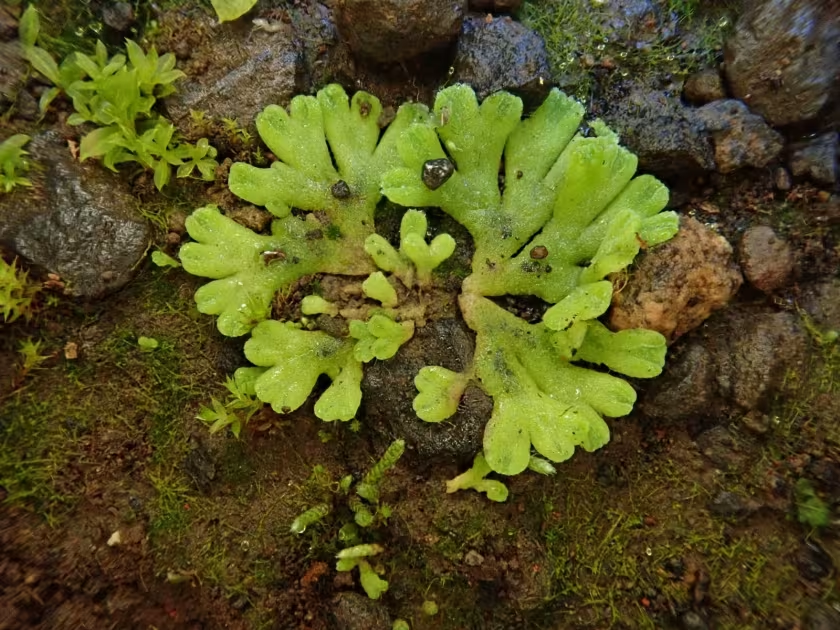
Description
Growing requirements
Riccia glauca is a species of liverwort belonging to the Ricciaceae family. Often overlooked, it acts as a ephemeral ground-cover plant that emerges in agricultural fields, particularly in damp, disturbed, or low-lying areas where soil surface moisture remains high for extended periods.
The plant thrives in loamy or clay-heavy soils that exhibit poor drainage. Its morphological structure, forming a rosette of thalli, allows it to adhere tightly to the soil surface, maximizing its contact with moist substrates and promoting rapid growth during cool, wet seasons.
Climate requirements for Riccia glauca are centered on high humidity and moderate temperatures. It typically flourishes during autumn, winter, or early spring months in temperate regions, avoiding the desiccating heat of summer through a short-lived annual life cycle.
In terms of soil management, this liverwort prefers neutral to slightly acidic pH levels. It is highly sensitive to soil disturbance, meaning that standard agricultural practices such as plowing, harrowing, and hoeing are highly effective at restricting its expansion across a field.
Successful management of the plant involves addressing the root cause: soil aeration and drainage. By improving the structure of the soil, farmers can naturally discourage the establishment of Riccia glauca, as it cannot compete with faster-growing vascular plants in well-drained conditions.
Main diseases and pests
Riccia glauca is not a primary agricultural pest or disease vector. However, it functions as an indicator species, highlighting areas of the field with excess water retention and compaction, which may subsequently hinder the germination of sensitive cash crops.
Major threats to the survival of this liverwort include mechanical cultivation and extreme drought. Once the soil surface is disrupted, the thalli are buried or displaced, preventing them from accessing the necessary light and moisture required for photosynthesis.
Diseases affecting Riccia glauca are limited to opportunistic fungal and bacterial pathogens that attack the thallus under conditions of extreme waterlogging. These conditions often lead to rapid decomposition of the plant colonies.
Pest pressure is negligible, though some micro-invertebrates, such as soil-dwelling mites, may inhabit the moss mats. These organisms generally do not pose a risk to primary crops but utilize the liverworts for shelter and moisture during unfavorable conditions.
Effective control is achieved by maintaining good soil health and proper drainage systems. Preventing the development of saturated patches ensures that Riccia glauca remains a minor component of the local flora rather than a widespread ground-covering presence.