
Riccia rhenana
Riccia rhenana
Description
Growing requirements
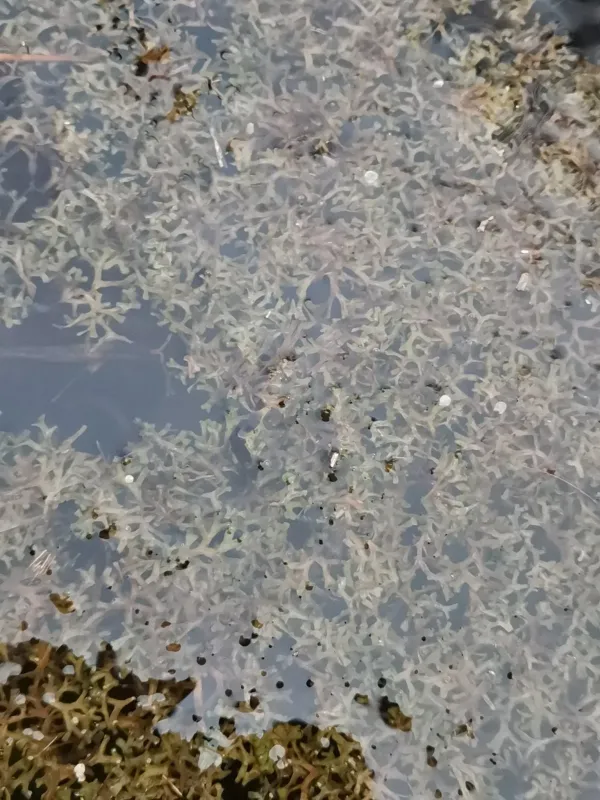
Riccia rhenana is an aquatic liverwort belonging to the Ricciaceae family. Unlike its terrestrial relatives, this species has evolved to thrive entirely submerged or floating on the surface of freshwater bodies, displaying a unique morphological adaptation to aquatic life.
The plant consists of a thallus that branches in a characteristic dichotomous pattern. It lacks a true root system, relying on its surface area to absorb essential nutrients directly from the water column, which makes it highly responsive to its environment.
Optimal development of Riccia rhenana requires stable water conditions with temperatures ranging between 18°C and 28°C. The species prefers medium-hard water and is sensitive to the chemical balance, particularly the levels of dissolved minerals.
Light intensity is a critical factor for the vigorous growth of this liverwort. While it requires bright light for efficient photosynthesis, it is essential to prevent thermal stress caused by excessive direct exposure, which can disrupt the plant's delicate tissues.
Effective cultivation involves a steady supply of carbon dioxide (CO2). Under high-tech aquarium conditions, supplemental CO2 injection significantly boosts the biomass production, allowing the plant to form dense, vibrant green cushions favored by professionals.
Yield
In aquatic agriculture and the ornamental plant industry, Riccia rhenana serves as an excellent biological filter. Its rapid uptake of nitrates and phosphates helps maintain clear water and supports a stable chemical environment for sensitive aquatic fauna.
The plant is highly valued as a spawning medium in commercial fish hatcheries. The intricate structure of the thallus branches provides a safe haven for fry and serves as a substrate where microscopic food organisms can thrive, feeding the hatchlings.
Vegetative propagation is the primary method of yield expansion. Since every fragment of the thallus has the potential to grow into a new colony, the plant offers high turnover rates, making it an economically viable crop for large-scale production.
The quality of the yield is defined by the density and coloration of the thalli. Commercial-grade Riccia rhenana must be bright green, free of debris, and dense, ensuring it maintains its aesthetic appeal when sold as a decorative aquascaping product.
Regular harvesting of excess biomass is necessary to prevent the undersides of the cushions from decaying due to a lack of light. This pruning practice ensures the longevity of the plant colony and maintains consistently high production standards.
Main diseases and pests
The primary threat to Riccia rhenana in cultivation is the invasion of filamentous algae. Because these algae grow rapidly and occupy the same ecological niche, they can quickly overgrow the liverwort, blocking sunlight and depleting available nutrients.
Certain species of freshwater snails and other invertebrate pests can cause physical damage to the thalli. Overpopulation of these organisms in a controlled cultivation system can significantly reduce the potential harvest and degrade the plant structure.
Bacterial decay is another concern, typically triggered by high levels of organic waste or poor water circulation. When the water becomes stagnant, the lower layers of the plant cushions may soften and decompose, leading to the collapse of the colony.
Environmental fluctuations, such as sudden changes in pH or mineral content, can lead to physiological stress. Such stress manifests as stunted growth, pale coloration (chlorosis), or tissue necrosis, which can render the crop unsellable.
Maintaining a clean and stable environment is the best prophylactic measure. Proper filtration and controlled nutrient dosing are essential to prevent the establishment of pests and to keep the Riccia rhenana population thriving and disease-free.