
Green ash
Fraxinus pennsylvanica Marsh.
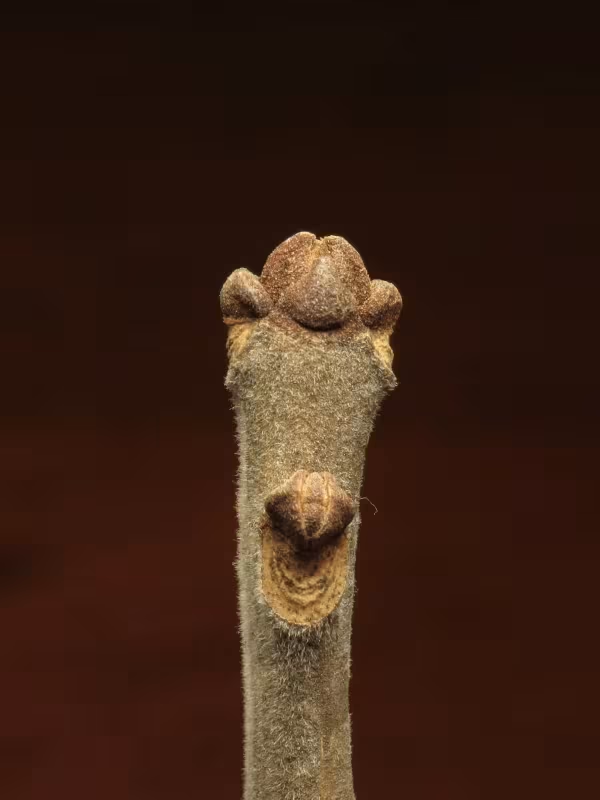
Description
Sowing dates
Seeds of the green ash (Fraxinus pennsylvanica Marsh.) are typically sown in autumn, allowing them to undergo natural stratification in the soil throughout the winter months.
For spring sowing, seeds require a cold moist stratification process at temperatures between 1°C and 5°C for a period of at least 3 to 4 months to overcome dormancy.
Prior to storage or planting, soaking seeds in water for 48 to 72 hours helps leach out germination-inhibiting substances and improves the final emergence rate.
In nursery settings, seeds should be sown in rows spaced 20–30 cm apart, ensuring they are covered with a thin layer of soil, usually not exceeding 3 cm deep.
Mulching the seedbed is a recommended practice to maintain uniform soil moisture and prevent the soil crust from hardening, which could hinder young sprouts.
Growing requirements
The green ash is a deciduous tree belonging to the Oleaceae family, well-known for its wide ecological amplitude and ability to grow in diverse site conditions.
It is famously resilient to various soil types, including clay and moist bottomland soils, making it an excellent choice for riparian restoration and shelterbelts.
While it thrives in deep, fertile, and well-drained loamy soils, it exhibits significant tolerance to periodic flooding, allowing it to colonize wet, alluvial habitats.
Being a shade-intolerant species, green ash requires full sunlight to achieve optimal growth rates and to develop a symmetrical, healthy crown structure.
The species is highly valued for its tolerance to urban environmental stresses, including air pollution, soil compaction, and the harsh conditions of metropolitan areas.
Main diseases and pests
The most critical threat to the green ash population globally is the emerald ash borer (Agrilus planipennis), an invasive insect that poses a severe risk of mortality.
Fungal infections, such as ash yellows and various bark cankers, can significantly weaken the tree, leading to crown dieback and long-term structural failure.
Nursery stock is occasionally vulnerable to powdery mildew, especially under high humidity conditions, which may cause premature leaf curling and reduced growth.
Effective management strategies involve regular monitoring for signs of borer holes or canopy thinning, combined with the removal of severely infected specimens.
Integrated pest management, including systemic insecticides and good silvicultural practices, is essential for maintaining the health and longevity of ash stands.