
Manna ash
Fraxinus ornus L.
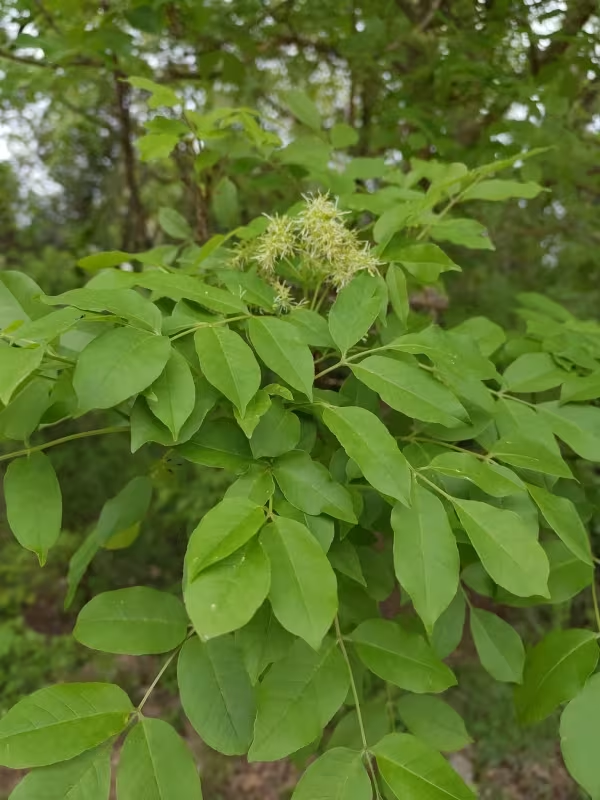
Description
Growing requirements
The Manna ash, scientifically known as Fraxinus ornus, is a deciduous tree belonging to the Oleaceae family. It is widely valued for its rounded, dense crown and attractive, fragrant white flowers that bloom in late spring.
Native to Southern Europe and Southwestern Asia, this species is highly adapted to warm, Mediterranean-like climates. It thrives in regions with hot summers and moderate rainfall, showing significant drought tolerance once established.
In terms of soil requirements, the Manna ash prefers well-drained, fertile, and slightly alkaline soils. It is particularly successful when planted on calcareous grounds, where its root system can develop optimally without risk of waterlogging.
Full sun exposure is essential for the healthy development of this culture. While it can tolerate partial shade, optimal flowering performance and crown density are only achieved when the tree receives direct sunlight for the majority of the day.
Economically and aesthetically, the Manna ash is a versatile species. Beyond its use in ornamental planting, it has historically been used for the production of "manna," a sugar-rich sap extracted from the trunk, which has commercial applications in pharmaceuticals.
Main diseases and pests
The most critical threat to Fraxinus ornus is the dieback disease caused by the fungus Hymenoscyphus fraxineus. This pathogen affects the branches and stems, leading to severe crown thinning and, in some cases, the death of the tree.
Pest pressures include the ash bud moth and various types of wood-boring beetles. These insects can cause significant structural damage to the tree, as well as facilitate the entry of fungal spores into the bark.
Scale insects and aphids are common pests that colonize young shoots, particularly in urban settings. Regular monitoring and the application of horticultural oils or systemic insecticides can help manage these populations effectively.
Root rot, specifically caused by Phytophthora species, is a common issue in poorly drained soils. Ensuring proper site selection and avoiding heavy, clay-based soils that retain moisture can mitigate this risk significantly.
Sanitation is a vital aspect of disease control. Removing and destroying infected branches immediately after detection is necessary to prevent the spread of pathogens to healthy parts of the canopy or neighboring trees.