
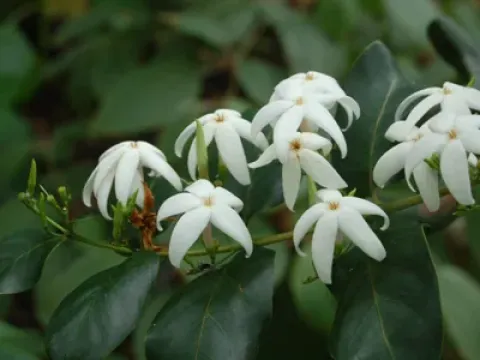
Ramosmania
Ramosmania
Ramosmania is a genus of flowering plants belonging to the family Rubiaceae. It is globally recognized for its rare and endangered species, most notably Ramosmania rodriguesii, which is endemic to the island of Rodrigues in the Indian Ocean.
What the section contains

Ramosmania
The plant thrives in tropical conditions that mimic the humid forest microclimate of its native range. It is not grown as an agricultural crop, as its cultivation is strictly limited to botanical gardens and research facilities aimed at preserving endangered flora.
Botanically, it presents as a woody shrub with opposite, glossy leaves. The anatomical structure of its flowers is characteristic of the Rubiaceae family, which is one of the largest plant families, known for including economically significant plants like coffee.
Cultivation requirements involve maintaining high humidity and a consistent temperature range, as the plant is extremely sensitive to cold snaps and drought. Soil must be nutrient-rich and porous to facilitate healthy root system development.
Management of the species is focused on propagation and genetic conservation rather than production. Because of its extreme rarity, traditional agronomic techniques do not apply, and intensive care is required for every individual specimen in cultivation.
The primary threat to Ramosmania is the loss of its natural habitat on Rodrigues island, combined with the pressure from invasive plant species that outcompete the endemic flora for light and soil nutrients.
In conservatory settings, the plant can be susceptible to common greenhouse pests such as aphids, spider mites, and scale insects, which target the tender foliage and sap of the shrub.
Fungal pathogens represent a significant risk, particularly those affecting the roots in conditions where soil aeration is insufficient or moisture levels become excessive and poorly controlled.
Since the species is critically endangered, the loss of individual plants to diseases or pests poses a major threat to the entire surviving gene pool of the genus.
Conservation strategies involve strict quarantine protocols and the implementation of sterile growing techniques to prevent the spread of pathogens that could compromise the remaining population.