
Ptilostemon gnaphaloides
Ptilostemon gnaphaloides
Description
Growing requirements
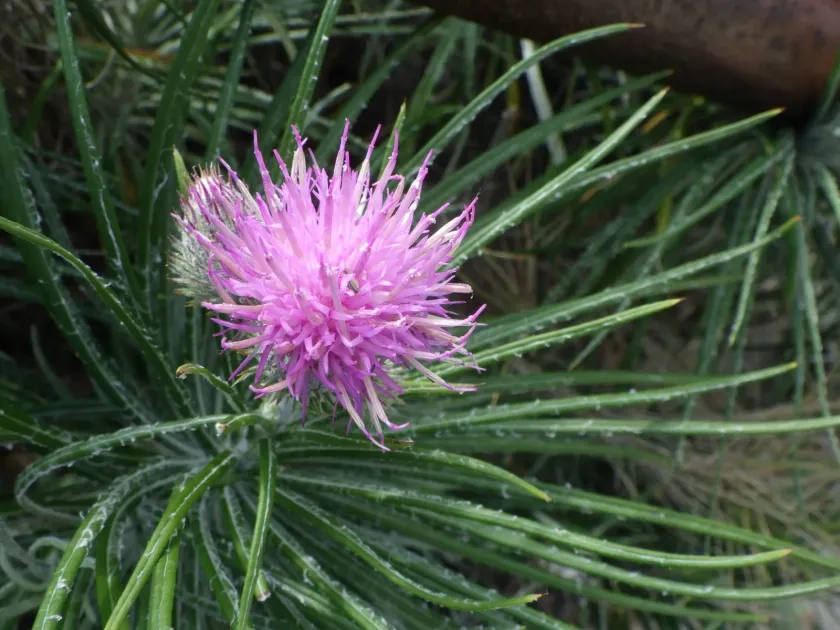
Ptilostemon gnaphaloides is a perennial herbaceous plant belonging to the Asteraceae family. It is recognized for its striking silver foliage, which results from the dense hair covering on its leaves and stems, serving as a natural defense against moisture loss in dry environments.
Botanically, the plant develops into a subshrub with terminal flower heads that resemble those of thistles. The blooms are typically pink or purple, providing a vibrant contrast to the silvery-grey foliage, which makes it a visually appealing subject for xeriscaping.
The plant requires full sun exposure and thrives in climates characterized by long, hot, and dry summers. It is not suitable for regions with high humidity or frequent rainfall, as it requires excellent air circulation to maintain its health and structural integrity.
Regarding soil conditions, Ptilostemon gnaphaloides demands very well-drained soil. It excels in rocky, sandy, or gravelly substrates where organic matter content is low. Any tendency for the soil to retain water, especially during winter, is detrimental to the plant's root system.
Its primary agricultural and horticultural value lies in its decorative use. Due to its hardiness and low maintenance requirements, it is widely utilized in sustainable landscaping, rock gardens, and Mediterranean-style gardens, providing aesthetic value without the need for constant irrigation.