
Ptilostemon casabonae
Ptilostemon casabonae
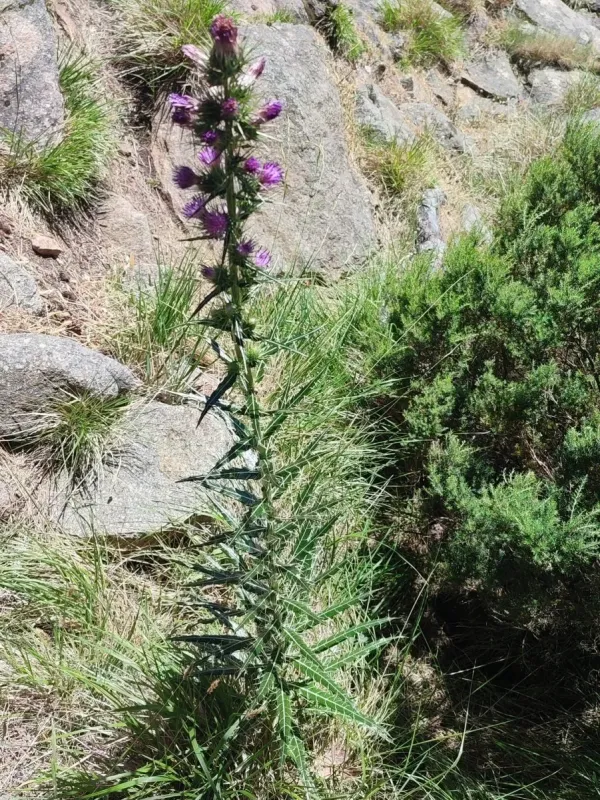
Description
Sowing dates
Ptilostemon casabonae is a distinct perennial herb belonging to the Asteraceae family. For successful cultivation, seeds should be sown in early spring when temperatures remain consistently above 15 degrees Celsius, ensuring optimal conditions for germination.
The seeds require a period of cold stratification to break dormancy. Sowing should be shallow, as the seeds need light for efficient germination. A well-draining, sandy-based substrate is recommended to prevent waterlogging during the initial growth phase.
Seedlings are best grown in individual pots to minimize root disturbance during transplantation. Once the plants reach a sufficient size and the threat of frost has passed, they can be hardened off and planted in their final outdoor location.
Spacing is a vital aspect of the planting process. Providing at least 50 centimeters between individual plants ensures that each specimen receives adequate airflow, which is critical for preventing fungal diseases in this species.
Vegetative propagation via division is possible for mature, established clumps. This process should be undertaken in early spring just as new growth begins to appear, ensuring the plant has enough energy to recover from the division process.
Growing requirements
As a Mediterranean native, Ptilostemon casabonae thrives in locations with full sun exposure. It requires at least 6-8 hours of direct sunlight daily to maintain its structural integrity and encourage the development of its unique flower heads.
The soil must be exceptionally well-draining. This species is highly adapted to rocky, calcareous, or sandy soils and will struggle, or eventually perish, in heavy, compact clays that retain moisture for prolonged periods after rainfall.
Once established, the plant is remarkably drought-tolerant. Its foliage, often covered in fine hairs, helps reduce transpiration rates. Irrigation should be restricted to the first season of growth, after which the plant becomes largely self-sufficient.
Climate tolerance is restricted to regions with mild winters. In areas prone to heavy frost, the plant requires protection, as excessive cold and winter moisture combined can damage the crown and lead to irreversible decay.
Fertilization should be kept to a minimum. The species is adapted to nutrient-poor soils; an overabundance of nitrogen will result in weak, succulent growth that is more susceptible to pests and lacks the characteristic woody resilience of the mature plant.
Main diseases and pests
Root rot represents the most significant threat to the survival of Ptilostemon casabonae. It is almost exclusively caused by poor soil drainage and excessive humidity, which prevents the roots from accessing necessary oxygen.
Aphids can infest the tender shoots and floral buds during the early stages of the growing season. While usually manageable, large populations can weaken the plant and encourage the development of sooty mold on the foliage.
Powdery mildew is a recurring problem in environments with high humidity and poor air circulation. Improving spacing and ensuring the foliage remains dry during irrigation are the primary methods for managing this fungal infection.
Gastropods, including slugs and snails, can graze on the young foliage during moist springs. Protective measures, such as creating barriers around the base of the plant using grit or volcanic rock, can effectively deter these pests.
Overall, keeping the plant in a dry, sunny environment is the most effective preventative strategy. When cultural requirements regarding light, soil composition, and water management are met, the plant rarely requires chemical intervention.