
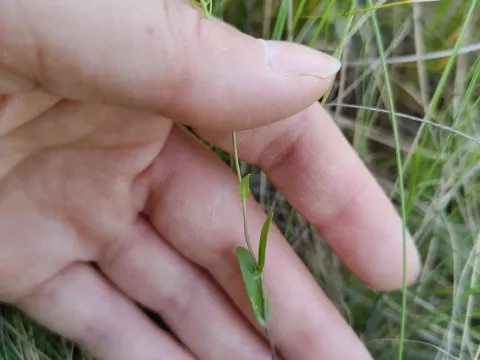
Pseudoarabidopsis
Pseudoarabidopsis
Pseudoarabidopsis belongs to the Brassicaceae family and is recognized for its biological relevance as a model organism and a prospective industrial crop.
What the section contains

Pseudoarabidopsis
Sowing timing depends heavily on the regional climate, with early spring being the standard window to ensure sufficient soil moisture for germination.
The seeds should be planted at a shallow depth, typically 0.5 to 1 centimeter, to facilitate quick emergence and establishment of the seedlings.
A well-prepared seedbed with fine soil structure is essential for consistent emergence across the entire area of the field.
Row spacing should be maintained at about 15 to 20 centimeters to reduce inter-plant competition while maximizing the light exposure for each individual plant.
This crop thrives in well-drained sandy or light loamy soils that possess a neutral pH balance to support healthy root development.
Adequate soil fertility is required, and balanced fertilization programs focusing on nitrogen, phosphorus, and potassium are recommended during the early phases.
Temperature management is key; the plant performs best in moderate conditions ranging between 15 and 22 degrees Celsius throughout the growing cycle.
Consistent moisture levels are necessary, particularly during the flowering stage, to prevent premature senescence and ensure full seed set.
Good air circulation and full solar exposure are critical requirements to prevent fungal buildup and ensure the plant reaches its full physiological potential.
Being a member of the mustard family, Pseudoarabidopsis is susceptible to common cruciferous pests such as flea beetles, which can cause significant damage.
Fungal diseases like downy mildew and clubroot represent major biological threats that can severely impact the health and vitality of the crop.
Integrated pest management strategies, including the use of trap crops and targeted biological treatments, are advised to mitigate these risks effectively.
Crop rotation is perhaps the most important agronomic practice to prevent the accumulation of soil-borne pathogens and specific cruciferous weeds in the field.
Regular scouting of the fields is essential to detect pest outbreaks early, allowing for timely intervention before the damage becomes irreversible.