
Polyscias gracilis
Polyscias gracilis
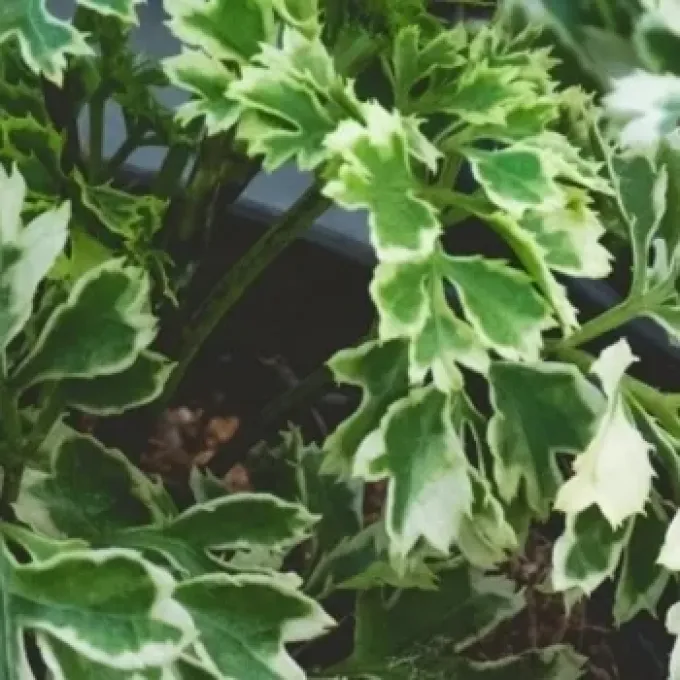
Description
Growing requirements
Polyscias gracilis belongs to the Araliaceae family. It is a highly decorative, evergreen woody plant known for its delicate, finely cut foliage that gives it an elegant, tree-like appearance suitable for indoor gardening.
Originating from the tropical regions of Southeast Asia and the Pacific, this plant thrives in stable, warm, and humid environments. It is widely recognized in professional floriculture as a premium ornamental culture.
The plant requires bright, indirect light to maintain its foliage density and color. Direct sunlight should be avoided as it can scorch the leaves, while insufficient light leads to premature leaf drop and leggy stems.
Soil requirements involve a well-draining, nutrient-rich substrate. A mix of peat, bark, and perlite is recommended to ensure excellent aeration and to prevent the compaction of the root system over time.
Temperature management is critical for the healthy growth of Polyscias. Ideally, it should be kept between +20°C and +25°C, with protection from cold drafts, which the plant is highly sensitive to during the cooler months.
Main diseases and pests
Spider mites are the most common pest, especially in low-humidity environments. They cause stippling on the leaves and can rapidly weaken the plant if left untreated with appropriate acaricides or consistent misting.
Scale insects and mealybugs can infest the leaf axils and undersides of leaves. Regular visual inspections are necessary to identify these pests early and apply mechanical removal or targeted insecticide treatments.
Root rot is the primary disease threat caused by waterlogged soil. This is often the result of improper drainage or over-frequent watering, leading to the rapid decay of the plant's delicate root system.
Fungal leaf spots can occur if the foliage is kept wet for too long without adequate airflow. It is important to maintain good ventilation in the area where the plant is situated to prevent moisture accumulation.
Preventative measures include maintaining consistent environmental conditions, proper irrigation practices, and ensuring that the plant is not subjected to rapid changes in temperature or position, which trigger stress-induced leaf shedding.