
Polyscias cumingiana
Polyscias cumingiana
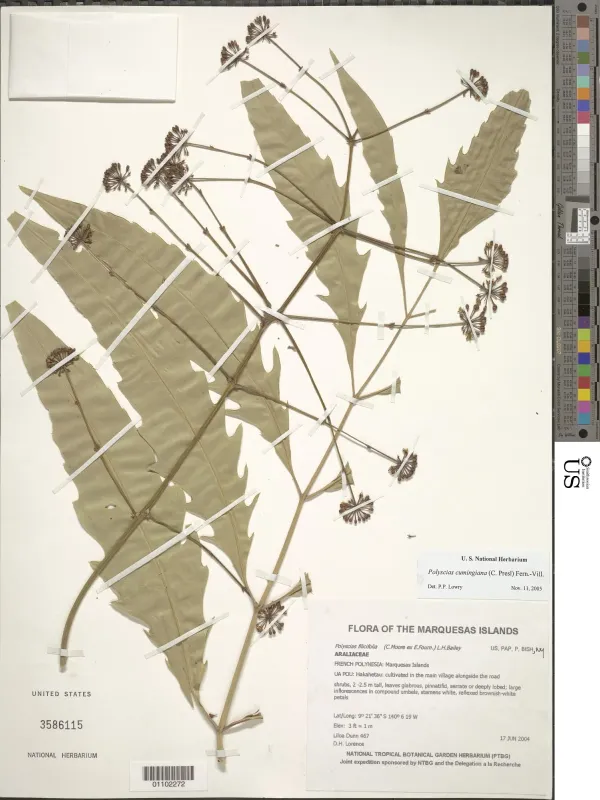
Description
Growing requirements
Polyscias cumingiana is a tropical evergreen shrub belonging to the Araliaceae family, native to the regions of Southeast Asia and the Pacific Islands. Known for its elegant, feathery foliage, it serves as a prominent ornamental species in tropical horticulture.
Botanically, the plant is characterized by its complex pinnate leaves with serrated margins, which provide a lush, dense appearance. It typically grows as a woody shrub or a small tree, capable of reaching several meters in height when cultivated in favorable outdoor conditions.
The plant requires high levels of ambient humidity and consistent warmth to thrive. It is sensitive to temperature drops below 15 degrees Celsius and should be protected from cold drafts, making it well-suited for controlled greenhouse environments or interior spaces.
Soil requirements involve a well-draining, nutrient-rich potting medium that prevents waterlogging. Regular irrigation is necessary to maintain moderate moisture; however, the substrate must be allowed to dry slightly between watering cycles to prevent root asphyxiation.
Commercially, Polyscias cumingiana is highly valued in the foliage plant industry for interior landscaping. It is often utilized as a specimen plant in bright, indirect light conditions or pruned to form bonsai or standard topiary shapes for botanical displays.
Main diseases and pests
Common pests affecting Polyscias cumingiana include spider mites and scale insects, which flourish in low-humidity environments. These pests can cause significant damage to the foliage, often leading to chlorosis or premature leaf drop if left unmanaged.
Pathogenic threats are primarily linked to fungal infections and root rot, often triggered by over-watering or stagnant airflow. Implementing a consistent monitoring program and ensuring proper horticultural hygiene are critical strategies to mitigate these risks and maintain plant vigor.