
Hairy butterwort
Pinguicula villosa
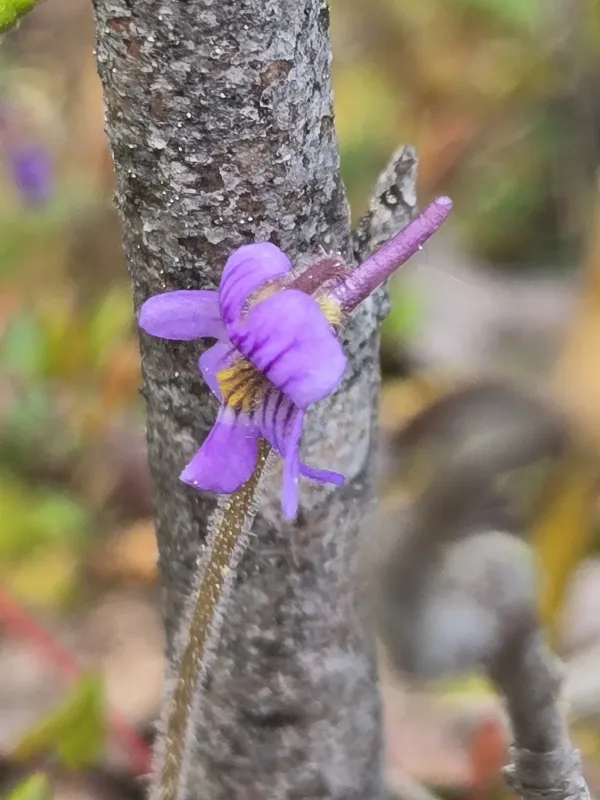
Description
Growing requirements
Hairy butterwort (Pinguicula villosa) is a carnivorous perennial herb belonging to the Lentibulariaceae family. It is distinct for its ability to survive in nutrient-poor environments by trapping small insects on its glandular foliage.
The species is native to subarctic and arctic regions. It typically populates nutrient-poor sphagnum bogs, where the climate is cold and the soil composition is highly acidic, allowing the plant to occupy a very narrow ecological niche.
Botanically, the plant develops a small, sticky rosette. The leaves are covered in specialized trichomes that produce mucilage to entrap prey. This carnivorous strategy is essential for the plant to gain nitrogenous nutrients unavailable in the wetland soil.
Cultivation requires extreme precision, mimicking the natural bog environment. It demands constant, pure water supply and high humidity levels. Direct sunlight should be avoided during the peak of summer to prevent the dehydration of its delicate leaves.
From an agronomic perspective, this plant is not a crop for mass production. Its value lies in biological research, specifically in studying carnivorous plant metabolism and the adaptation of rare flora to northern climatic stressors.
Main diseases and pests
The primary threats to Pinguicula villosa include habitat loss due to peatland drainage and global climatic instability. Since it is highly specialized, even minor changes in water acidity or temperature can lead to rapid population decline.
Pathogens like soil fungi and various molds are significant threats if the cultivation container lacks proper airflow. Additionally, pests such as aphids or spider mites can destroy the plant's delicate traps, hindering its nutrient intake mechanism.