
Balkan butterwort
Pinguicula balcanica
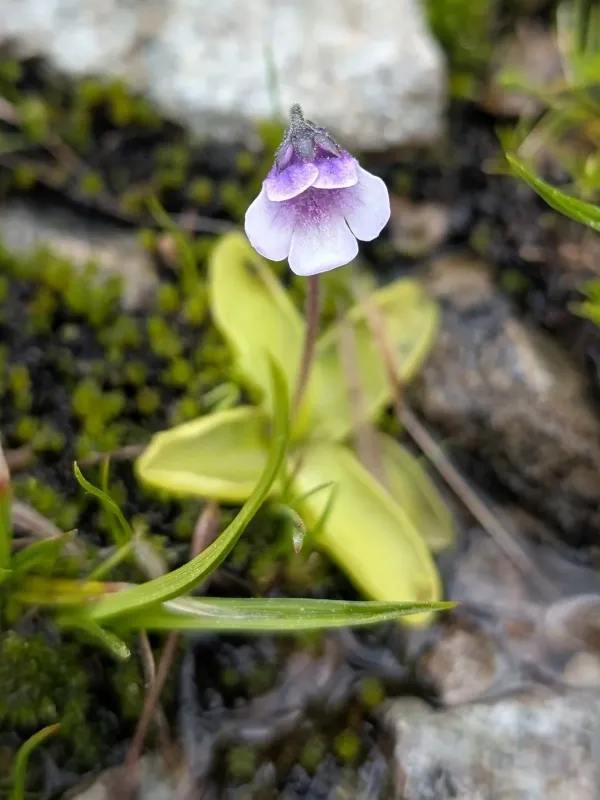
Description
Growing requirements
The Balkan butterwort (Pinguicula balcanica) is a perennial carnivorous plant belonging to the Lentibulariaceae family. Its natural habitat is restricted to the high mountain regions of the Balkan Peninsula, typically growing on wet limestone cliffs and alpine meadows.
Botanically, the plant consists of a basal rosette of succulent, sticky leaves that glisten due to the presence of sessile and stalked glands. These glands secrete a mucilage that traps small insects, allowing the plant to supplement its nutrient intake in nutrient-poor alpine environments.
Successful cultivation requires maintaining high humidity and utilizing only pure, distilled, or rainwater for hydration. The "tray method" of watering is highly recommended, as it prevents the medium from drying out while protecting the delicate root system from mineral buildup.
The preferred growing medium consists of a peat-based mix amended with perlite, vermiculite, or silica sand to ensure high drainage and proper aeration. Fertilizer should never be applied directly to the soil, as these plants have evolved to thrive in environments with minimal nutrient content.
Light requirements involve bright, indirect sunlight to maintain the plant's vibrant coloration and growth habit. A period of dormancy during the winter months, characterized by cooler temperatures, is essential for the plant to recover and produce flowers in the following spring.
Main diseases and pests
The primary threats to Pinguicula balcanica include crown rot and various fungal pathogens, usually triggered by poor air circulation and excessive moisture during the dormant season. Ensuring good airflow around the leaves is critical for preventing these issues.
Pest management focuses on preventing infestations of aphids and fungus gnats. Should pests appear, physical removal or highly diluted insecticidal soaps are safer options than standard pesticides, which can be toxic to the plant's sensitive glandular surfaces.