
Alpine butterwort
Pinguicula alpina
Description
Growing requirements
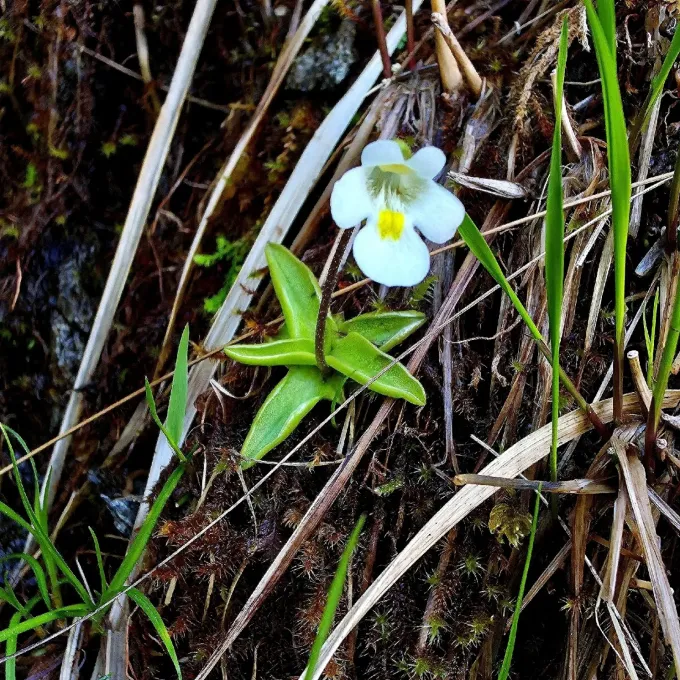
Alpine butterwort (Pinguicula alpina) is a carnivorous perennial plant belonging to the Lentibulariaceae family. It is distinct from conventional agricultural crops due to its specialized adaptation to high-altitude, rocky, and calcareous environments.
The cultivation of this species requires a highly specific microclimate, mimicking the moist, cool conditions of limestone fens and alpine meadows. High atmospheric humidity and consistent, mineral-rich moisture are critical for survival.
Soil composition must be low in nutrients but high in limestone content. Standard potting soils are unsuitable, as the plant has evolved to acquire supplemental nitrogen by trapping and digesting small insects on its glandular leaf surface.
The plant exhibits a rosette growth form with sticky leaves that function as passive traps. These leaves secrete enzymes that break down prey, allowing the plant to thrive in nitrogen-poor environments where other vegetation fails to compete.
In terms of agricultural or botanical usage, Pinguicula alpina is primarily cultivated for research and conservation. It serves as a biological indicator for pristine mountain habitats and is a subject of study regarding plant-insect evolutionary interactions.
Main diseases and pests
The primary threat to Pinguicula alpina is root rot, which occurs when the substrate remains excessively waterlogged without proper drainage or airflow.
Fungal pathogens pose a significant risk to the leaves, especially if the plants are kept in closed containers with stagnant air and poor circulation.
Improper water quality, particularly the use of hard or chemically treated tap water, can lead to mineral toxicity, damaging the sensitive glandular hairs used for prey capture.
Pests such as spider mites may become problematic in greenhouse conditions where the environment is too dry and lacks sufficient humidity levels.
Environmental degradation, including the drying out of alpine habitats and changes in temperature regimes, represents the most severe threat to the long-term viability of wild populations.