
Corsican butterwort
Pinguicula corsica
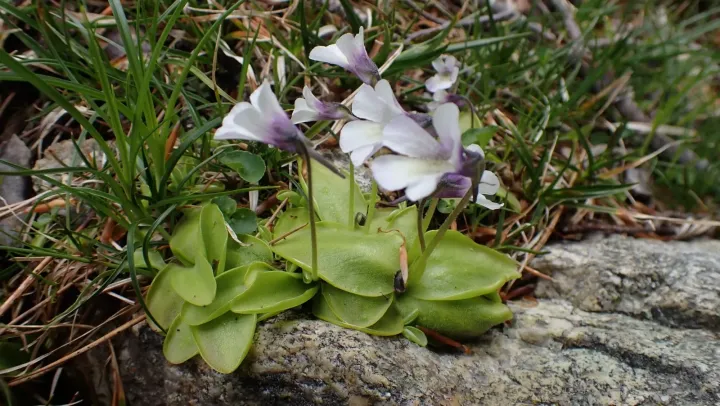
Description
Growing requirements
Corsican butterwort (Pinguicula corsica) is a perennial carnivorous plant belonging to the Lentibulariaceae family. It is a rare botanical gem known for its unique evolutionary adaptation to nutrient-poor alpine environments through insect trapping.
The plant is native to the high-altitude regions of Corsica, where it inhabits moist rocky areas, springs, and stream banks. Its natural habitat is characterized by cool temperatures, high humidity, and acidic, waterlogged soils that are devoid of traditional agricultural nutrients.
In cultivation, Pinguicula corsica requires a specialized substrate consisting of peat moss, perlite, and silica sand. It is critical that the growing medium remains consistently moist but well-drained, mirroring the seepage zones of its native mountainous regions.
Climate requirements include protection from extreme heat and direct, harsh sunlight. Successful growth is best achieved in cool greenhouse conditions or well-ventilated terrariums where air humidity stays high, ensuring the plant can maintain its glandular leaves.
The economic value of this plant is primarily restricted to specialized botanical collections and academic research. It is not an agricultural crop in the traditional sense, but it remains a subject of high interest for conservationists and enthusiasts of rare endemic flora.
Main diseases and pests
Pathogenic threats to Pinguicula corsica largely stem from poor water quality. The use of tap water containing minerals or chlorine causes rapid physiological decline, as the plant is evolved to absorb nutrients from its prey rather than through roots from soil salts.
Common pests include aphids and mealybugs, which settle on the leaves and disrupt the function of the digestive glands. Infestations lead to the necrosis of the rosette tissue, often resulting in secondary infections by opportunistic bacteria or fungi.
Fungal rots are the most prevalent disease, typically occurring during periods of stagnant air or over-watering. If the substrate remains too wet and cold without sufficient air circulation, the base of the plant can succumb to crown rot quickly.
Maintaining biological hygiene is essential for the longevity of the species. Using distilled, deionized, or rain water is mandatory to avoid the accumulation of toxins that make the plant susceptible to environmental stress and subsequent pest attacks.
Conservation status is a major concern as the plant is an endemic species. Protecting the natural alpine micro-habitats in Corsica is essential to prevent the extinction of this rare plant, as artificial propagation does not yet allow for the restoration of wild populations.