
Hairy-flowered butterwort
Pinguicula hirtiflora
Description
Growing requirements
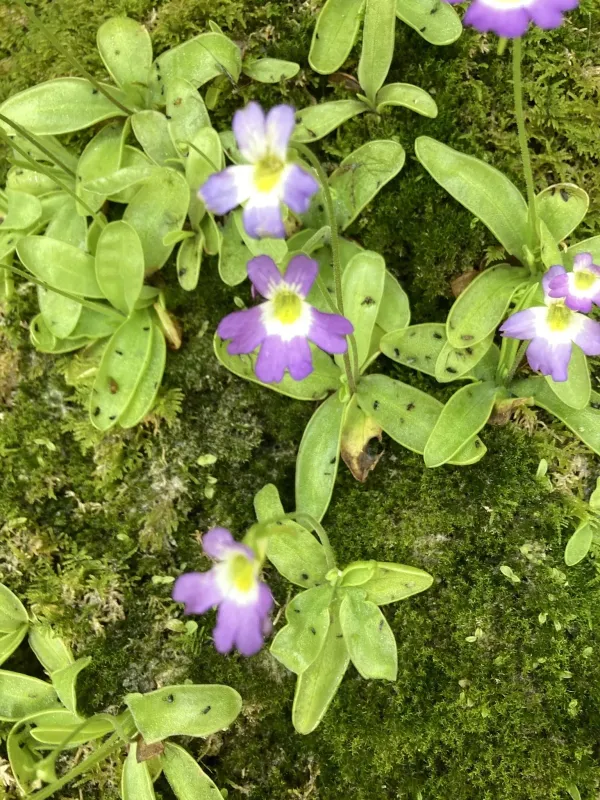
The Hairy-flowered butterwort (Pinguicula hirtiflora) belongs to the Lentibulariaceae family. This fascinating carnivorous plant is known for its specialized trapping mechanism.
Native to the Mediterranean regions, specifically limestone areas, it has adapted to environments where traditional nutrients are scarce, forcing the plant to derive minerals from insects.
Botanically, it features a basal rosette of succulent leaves coated in sticky glands that secrete mucilage, effectively capturing small prey that lands on the surface.
Cultivation requires a mineral-based, nutrient-poor medium such as a mix of peat and perlite, ensuring excellent drainage while maintaining constant moisture levels.
It thrives in humid environments with indirect bright light, mimicking the misty and rocky conditions of its natural mountain habitat to remain healthy and vibrant.
Main diseases and pests
Root rot is the primary threat to Pinguicula hirtiflora, often triggered by waterlogged substrate and poor air circulation around the plant's base.
Pests like mealybugs and aphids can severely affect the plant by feeding on its nutrient-rich succulent tissues, which often leads to stunted growth.
Fungal pathogens represent a significant danger if the plant is kept in stagnant, high-humidity conditions without proper airflow to dry the leaf surfaces occasionally.
The accumulation of minerals from tap water can poison the sensitive root system, creating an environment where pathogens multiply more rapidly than usual.
Effective management involves consistent preventative inspections and adjusting water quality to ensure that the carnivorous traits remain active and the plant remains resilient.