
Causses butterwort
Pinguicula caussensis
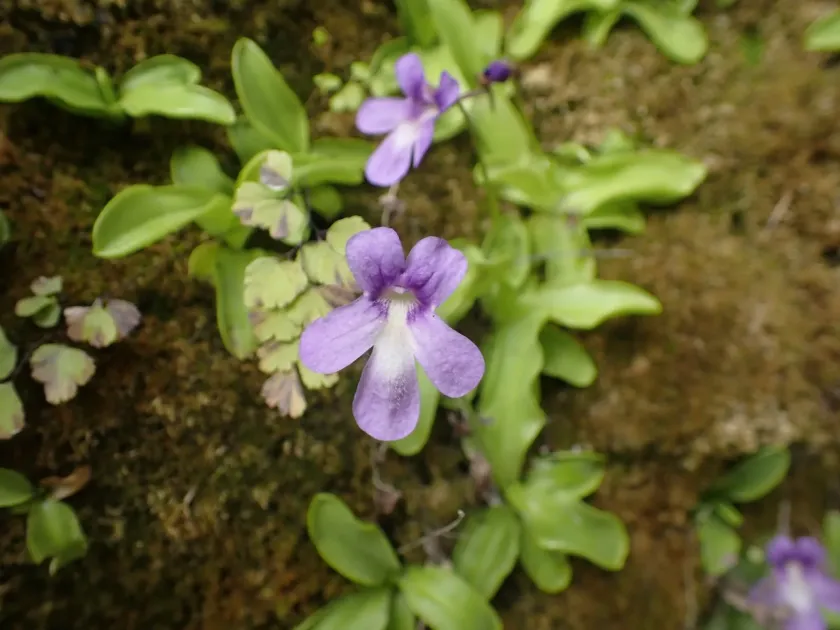
Description
Growing requirements
The Causses butterwort (Pinguicula caussensis) is a fascinating species belonging to the Lentibulariaceae family. Native to the limestone regions of the Causses in France, this plant has adapted to survive in mineral-poor environments by supplementing its nutrients through carnivory.
Morphologically, the plant forms a flat basal rosette of sticky, gland-covered leaves. These leaves capture small gnats and other insects, using digestive enzymes to absorb nutrients. This adaptation is essential for its survival in natural limestone crevices where organic matter is scarce.
For cultivation, Pinguicula caussensis requires a specialized limestone-rich substrate. The potting mix should be well-draining yet moisture-retentive, typically composed of a mix of limestone chips, perlite, and a small amount of peat or specialized carnivorous plant compost.
Environmental conditions should mimic its natural habitat. It prefers bright, indirect light to maintain its vibrant leaf color and sticky surface. High humidity is crucial, especially during the active growing season, to support the secretory glands' function.
Dormancy is a critical biological phase for this species. During the winter months, the plant forms a hibernaculum (a dense bud). During this period, the plant must be kept cool (5-10°C) and the soil should be kept nearly dry to prevent rot and ensure vigorous spring growth.
Main diseases and pests
Fungal infections, particularly Botrytis or various root rots, represent the most significant threat to Pinguicula caussensis. These issues are almost exclusively caused by poor air circulation or overwatering during the dormant winter period.
Insect pests, such as aphids and spider mites, can damage the leaves, reducing the plant's ability to feed and photosynthesis. Due to the sensitive nature of their glandular surface, pesticide use should be extremely cautious and limited to low concentrations.
Mineral salt accumulation is a hidden danger for this species. Regular usage of tap water can lead to soil toxicity, which kills the fine roots. Using only distilled or rain water is a mandatory rule for any successful grower.
Lack of winter dormancy often leads to the death of the plant. Without the required cooling period, the metabolic processes do not reset, eventually leading to exhaustion and decline of the entire specimen by the following summer.
Insects like fungus gnats might be attracted to the moisture, but they are more of a symptom of soil issues. Keeping the surface clean and ensuring the substrate is not excessively soggy is the best long-term prevention strategy.