
Pinguicula agnata
Pinguicula agnata
Description
Growing requirements
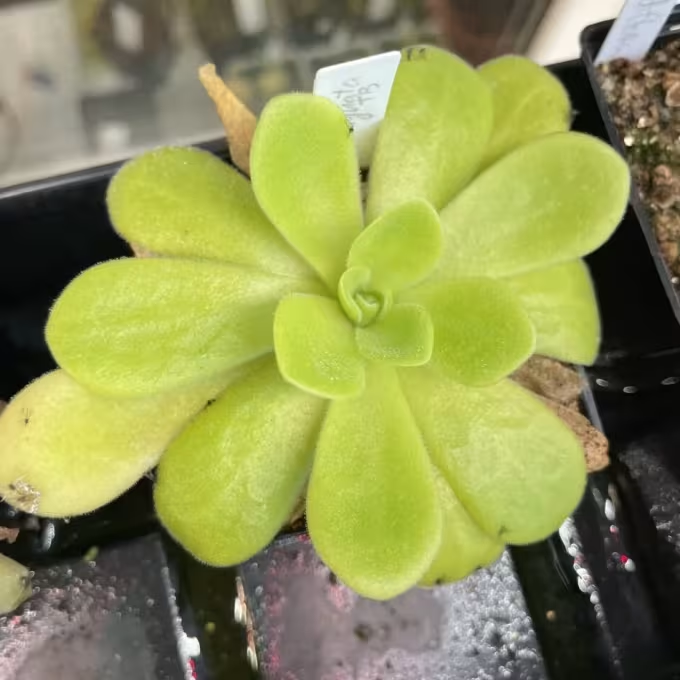
Pinguicula agnata is a perennial carnivorous plant belonging to the Lentibulariaceae family, native to the limestone cliffs of Mexico. It is categorized as a tropical butterwort, known for its succulent-like, fleshy leaves that form a compact basal rosette throughout the year.
Light requirements for this species include bright, indirect sunlight. If kept in areas with insufficient light, the plant will lose its compact form and vibrant leaf coloration, becoming leggy. Conversely, avoiding direct midday sun is essential to prevent damage to the leaf tissues.
The growing medium should replicate the plant's natural mineral-rich but nutrient-poor habitat. A substrate composed of peat moss, perlite, and coarse sand or pumice works best to ensure proper aeration and the rapid drainage of excess water, which is critical for root health.
Watering must be strictly managed using distilled, reverse osmosis, or rainwater. The tray method is recommended during the growing season to maintain constant moisture, whereas in the winter period, the plant requires a drier substrate to prevent the rotting of its succulent foliage.
Temperature management plays a vital role in the plant's development. It thrives in mild conditions, ideally between 18 and 25 degrees Celsius. Ensuring a steady environment without extreme fluctuations helps the plant maintain its sticky glandular surface for catching prey.
Main diseases and pests
The primary threats to Pinguicula agnata are fungal infections and rot caused by water stagnation within the center of the leaf rosette. Maintaining good air circulation is the most effective preventative measure against these environmental issues.
Pests such as fungus gnats, mealybugs, and spider mites can occasionally affect the plant. Because the leaves are delicate and covered in sticky mucilage, the use of harsh chemical pesticides should be avoided; manual removal or mild insecticidal soaps are preferred if infestations occur.