
Pinguicula moranensis
Pinguicula moranensis
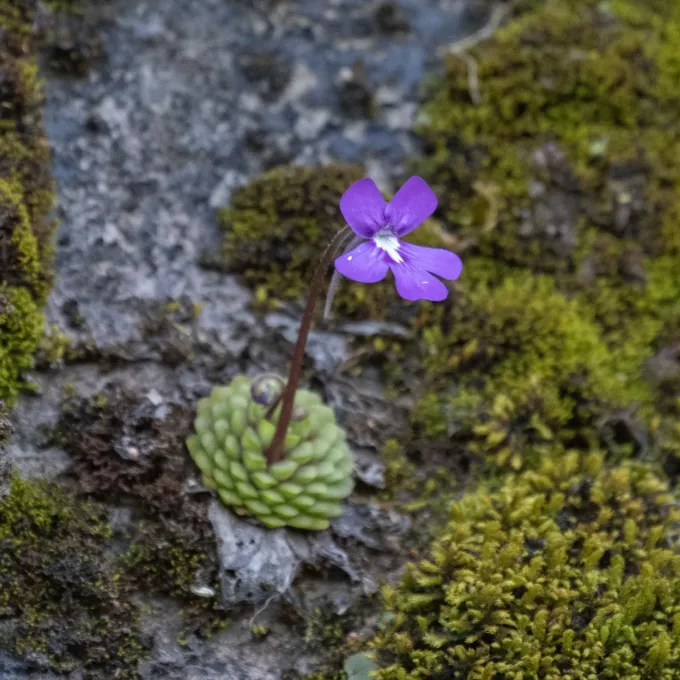
Description
Sowing dates
Pinguicula moranensis is a distinct species within the Lentibulariaceae family, known for its ability to produce sticky, glandular leaves that function as insect traps.
Propagation is most efficiently achieved through leaf cuttings, which can be placed on a moist, nutrient-poor substrate to initiate new rosettes.
Seeds of this species are dust-like and require surface sowing on sterilized media, remaining uncovered to receive enough light for germination.
As a carnivorous crop, its biological cycle consists of a summer succulent phase and a winter non-carnivorous phase, which is vital for the plant's long-term health.
Strategic timing for propagation and repotting is essential, usually occurring during the transition from the winter rosette to the summer growth phase in early spring.
Growing requirements
This species thrives in high light conditions, ideally receiving 12 hours of bright, indirect sunlight to maintain its unique foliage coloration and predatory function.
Soil composition must be inorganic-heavy, typically consisting of a mix of peat moss, coarse sand, perlite, and vermiculite to ensure excellent drainage.
Watering requires pure water only; tap water contains minerals that accumulate in the substrate and eventually prove toxic to the delicate root system.
Environmental humidity should remain between 50% and 70%, making this species suitable for terrarium cultivation or controlled indoor environments with good air circulation.
Thermal stability is a key agronomic requirement, with optimal growth occurring at temperatures between 20°C and 25°C during the active vegetative season.
Main diseases and pests
Botrytis and various fungal pathogens are the primary threats, especially when the plant is kept in high humidity without adequate air movement.
Mealybugs are known pests that hide deep within the center of the rosette, making them difficult to detect and treat without damaging the plant's glandular surface.
Excessive moisture in the center of the rosette can lead to crown rot, a condition that is often fatal if not treated by removing infected tissues immediately.
- Regular monitoring of the leaf axils.
- Maintaining a clean growing environment.
- Avoiding water contact with the central growth point.
- Immediate removal of dead leaves to prevent rot.
Prevention is the best strategy for managing these pests and diseases, emphasizing the importance of clean substrate and non-mineralized irrigation water.