
Pale butterwort
Pinguicula lusitanica
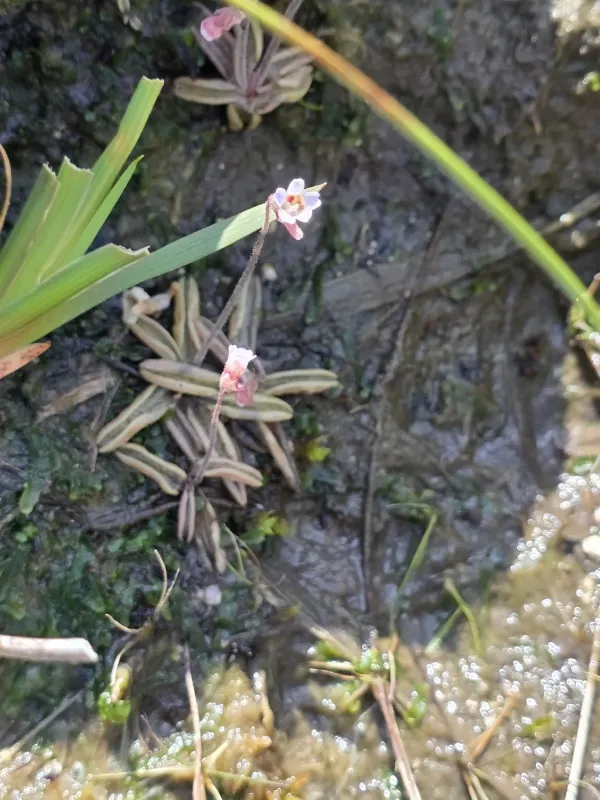
Description
Growing requirements
The pale butterwort (Pinguicula lusitanica) is a small carnivorous herbaceous plant belonging to the Lentibulariaceae family. Unlike many of its relatives, this species is an annual or a short-lived perennial characterized by a rosette of pale green leaves.
The natural range covers the Atlantic coast of Europe, including Portugal, Spain, France, Ireland, and the United Kingdom. The plant prefers wet, acidic, and nutrient-poor soils such as peat bogs, stream banks, and damp heaths.
Successful cultivation requires high air humidity and a constant supply of water in the tray. The optimal substrate should consist of a mixture of peat and sand or perlite, which ensures proper aeration of the root system while maintaining moisture.
The plant is extremely sensitive to water quality, so only distilled, rainwater, or osmotic water should be used for irrigation. The introduction of mineral salts and fertilizers into the soil is fatal to the root system of this species.
The temperature should be moderate: the plant does not tolerate extreme heat or hard freezing of the soil well. The ideal environment consists of cool greenhouses or open ground in regions with a mild maritime climate.
Main diseases and pests
The main threat to butterworts is fungal diseases, which develop due to stagnant air and excessive planting density. Gray mold infection often occurs due to poor ventilation around the rosettes.
Pests, such as mealybugs or aphids, can settle on the rosettes and suck juices from the delicate leaves. Because the plant is insectivorous, the use of chemical insecticides should be approached with extreme caution.
Insufficient light intensity leads to the stretching of the rosette and the loss of the plant's ability to trap insects. This weakens the specimen, making it more vulnerable to pathogens.
Substrate desiccation is a critical factor causing the rapid death of the entire population. Even a short-term moisture deficit leads to irreversible damage in the leaf tissues.
Incorrect soil composition with an excess of nutrients leads to the development of root rot. The plant is evolutionarily adapted to poor substrates and cannot assimilate traditional organic fertilizers.