
Long-leaved butterwort
Pinguicula longifolia
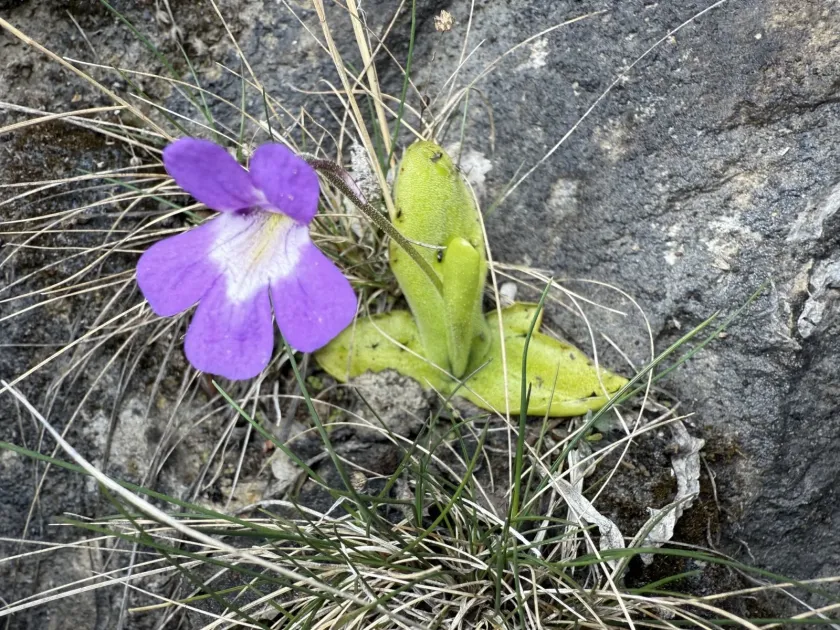
Description
Growing requirements
The long-leaved butterwort (Pinguicula longifolia) is a specialized perennial carnivorous plant belonging to the Lentibulariaceae family. This species is typically found in high-altitude environments, clinging to calcareous rock crevices in regions such as the Pyrenees.
Botanically, the plant is characterized by long, lanceolate leaves forming a flat rosette. These leaves possess unique glandular hairs that secrete a sticky substance, acting as a trap for small insects, which are then digested by enzymes to supply the plant with essential nitrogen.
In cultivation, the species demands precise moisture management. A high-porosity substrate mix, typically composed of peat moss, perlite, and crushed limestone, is essential to replicate its natural habitat. Watering must be done from the bottom to keep the soil consistently moist but never waterlogged.
The plant requires a distinct winter dormancy period characterized by cooler temperatures and reduced light. During this phase, the plant transitions into a tight hibernaculum. Failure to provide this cold period can severely impact the plant's growth cycle and lead to physiological decline.
The utility of Pinguicula longifolia is primarily scientific and ornamental within specialized collections. Due to its specific environmental needs, it is considered a challenging species for beginners, serving mainly as an indicator of advanced knowledge in the cultivation of temperate carnivorous flora.
Main diseases and pests
The primary threats to the health of this species in a greenhouse environment are various fungal pathogens, such as Botrytis. High humidity levels without adequate air movement often trigger these infections, necessitating the use of systemic fungicides during the autumn and winter months.
Insect pests such as aphids and mealybugs pose a significant threat by sap-sucking on the tender leaf tissues. Effective management involves careful monitoring and the use of targeted biological controls to prevent permanent damage to the delicate carnivorous leaf structures.