
Purple groundcherry
Physalis lobata Torr.
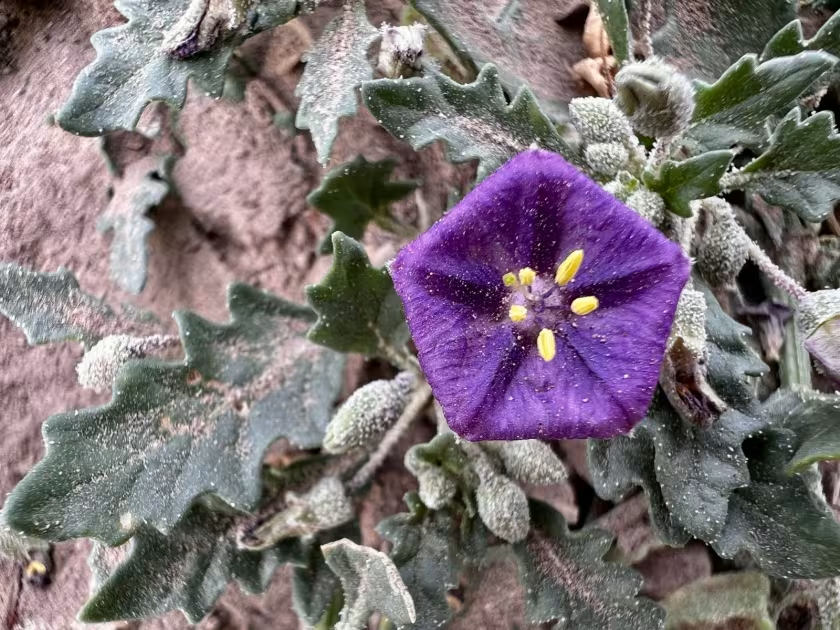
Description
Sowing dates
Physalis lobata is a perennial herbaceous plant belonging to the Solanaceae family. In its natural desert habitat, seeds disperse in late summer, germinating after winter dormancy when the soil temperature becomes stable.
In agricultural settings, seeds are sown in early spring. Due to the hard seed coat, pre-sowing stratification is highly recommended to improve the germination rate. Seeds should be sown shallowly, about 0.5 to 1 cm deep.
Seedlings can be started in a greenhouse in late winter. This approach allows for vigorous root development before transplanting the young plants into the field once the risk of frost has passed.
Space the plants approximately 50 cm apart. This spacing is necessary because Physalis lobata produces a spreading root system that actively colonizes the surrounding soil space.
Choose a site with well-draining soil and excellent sun exposure. Compacted soils should be amended with organic matter or grit to ensure that the fragile roots do not suffocate during sudden rain events.
Growing requirements
This species is native to the arid regions of North America, making it exceptionally drought-tolerant. It thrives in high-heat environments and does not require constant supplemental irrigation.
The plant performs best in neutral to alkaline soils. It is particularly well-adapted to calcium-rich substrates, which support its structural integrity and overall vigor throughout the growing season.
Temperature management is simple as the plant is adapted to extreme diurnal shifts. While it loves full sunlight, it is vital to keep the root zone protected from excessive moisture accumulation, which can cause crown rot.
Agronomic practices focus on minimal intervention. Occasional deep watering during the peak flowering stage is sufficient to ensure good fruit set during prolonged periods of severe drought.
Avoid excessive nitrogen fertilization, as this encourages lush vegetative growth at the expense of fruit production. Relying on natural fertility is often preferred for this hardy wild species.
Yield
The yield of Physalis lobata is typically characterized by small but numerous fruits. The production is reliable even in regions where irrigation is unavailable, making it a sustainable crop choice.
Plants reach their peak production in late summer. A single healthy plant can produce several hundred fruits contained within papery husks that serve as natural protection from pests.
The harvest capacity depends largely on the pollinator activity in the field. Providing a favorable environment for native bees can significantly increase the total yield per square meter.
In selective breeding programs, Physalis lobata is valued for its unique genetic traits that contribute to hardiness. While not grown for mass-market fruit consumption, its potential as a specialty crop is growing.
To maximize the harvest, it is recommended to keep the ground under the plant clean or covered with a layer of mulch. This prevents the fruits from deteriorating when they naturally drop from the plant.
Main diseases and pests
The primary threats are fungal pathogens, specifically those that thrive in high humidity or stagnant air. Proper spacing and airflow are the most effective ways to prevent disease outbreaks.
Common Solanaceae pests, such as aphids and spider mites, may target the foliage during hot, dry spells. Regular monitoring is essential to catch infestations before they spread across the field.
Crop rotation is critical when cultivating Physalis lobata. Do not plant it in areas previously occupied by tomatoes, potatoes, or peppers to reduce the risk of soil-borne viral and bacterial infections.
Mechanical weed control is preferred over chemical herbicides, as the plant can be sensitive to certain broad-spectrum products that may stunt its development.
Whiteflies can also be a significant issue in sheltered or greenhouse environments. Integrating biological controls like predatory mites can help maintain a balanced ecosystem around the crop.
Harvesting
Harvesting should occur when the husks turn papery, dry, and tan in color. At this stage, the fruit inside reaches its peak flavor and is ready for collection or processing.
The fruits can be gathered manually or by clearing the area beneath the plant once they have shed naturally. This method ensures that only fully mature fruit is collected.
Post-harvest care involves stripping the dry husks from the fruit. If the fruits are intended for long-term storage, they should be cleaned and dried in a well-ventilated area to prevent decay.
After the harvest is complete, the remaining vegetative biomass should be removed from the field. This practice minimizes the risk of pests overwintering in the debris and preserves soil health.
When stored in cool, dry conditions with adequate airflow, the cleaned fruit remains viable for an extended period, allowing for efficient inventory management and seed extraction.