
Sulfur bamboo
Phyllostachys sulphurea
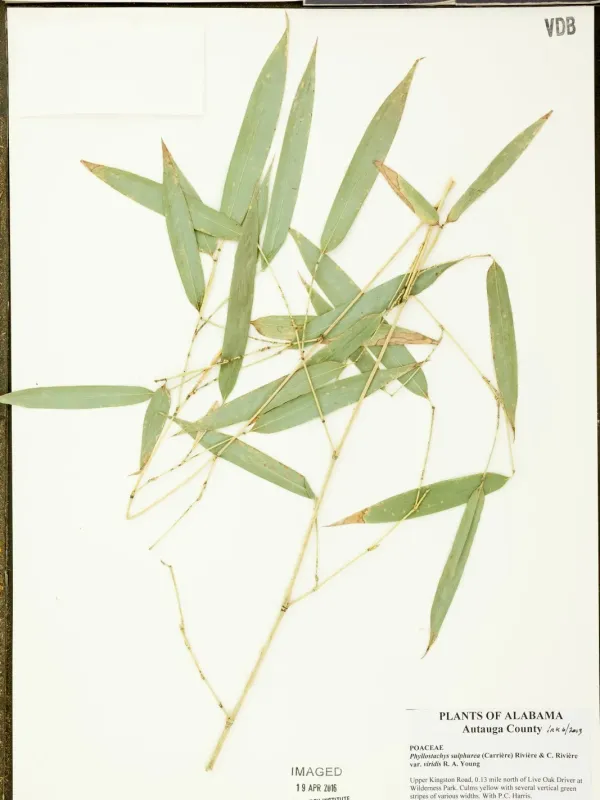
Description
Growing requirements
Sulfur bamboo (Phyllostachys sulphurea) is a perennial evergreen plant belonging to the Poaceae family. This woody bamboo species is highly valued for its striking yellow culms that provide a vibrant visual element to any garden or park setting.
Originating from China, this bamboo has spread globally as a popular choice for ornamental landscaping. Its ability to create dense, upright screens makes it an excellent plant for privacy hedging and focal point features in landscape design.
The plant thrives in well-drained, fertile soil with a slightly acidic to neutral pH. It is essential to ensure that the planting site is rich in organic matter to support the rapid growth of the rhizomes and culms during the peak growing season.
Regarding climate, this species prefers temperate conditions with ample sunlight. While it is considered relatively cold-hardy for a bamboo of this type, it requires protection from desiccating winter winds which can cause significant damage to the foliage.
Consistent watering is crucial for sulfur bamboo, particularly during the establishment phase. The soil should remain consistently moist but never waterlogged, as poor drainage will lead to root rot and jeopardize the health of the entire clump.
Main diseases and pests
Pests such as spider mites and mealybugs can affect the plant, particularly in sheltered or indoor environments where air humidity is low. Regular monitoring and misting can help prevent these infestations from becoming problematic.
Fungal diseases like leaf rust may occur if the planting site lacks proper airflow. Ensuring adequate spacing between plants and performing regular thinning of the culms is necessary to maintain a healthy environment within the grove.
Nutrient deficiencies, particularly nitrogen, can manifest as yellowing of the leaves, known as chlorosis. Providing a balanced, slow-release fertilizer in early spring helps the plant maintain its intense coloration and vigorous growth rate.
Winter damage is a potential threat in regions nearing the plant's hardiness limit. Snow accumulation on the heavy culms can cause them to bend or snap, so it is often advised to gently shake off excess snow during the winter months.
Rhizome rot is a severe condition caused by poor soil drainage. If the soil remains saturated for long periods, the underground root system may begin to decay, which is often irreversible. Proper soil preparation before planting remains the best defense.