
Sweet shoot bamboo
Phyllostachys dulcis
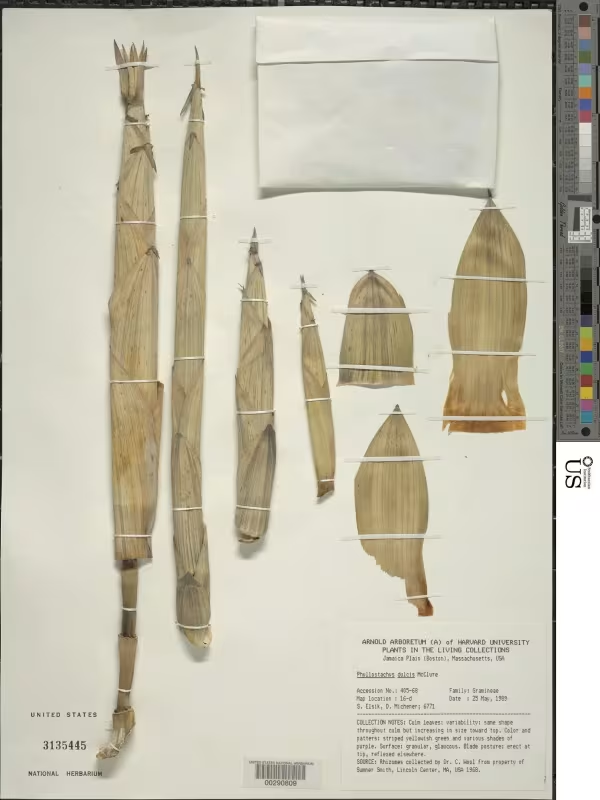
Description
Growing requirements
Phyllostachys dulcis, commonly known as sweet shoot bamboo, is a perennial plant belonging to the Poaceae family. It is highly regarded in agriculture for its tender, mild-flavored shoots that lack the bitterness found in many other bamboo species.
Native to the subtropical regions of China, this species thrives in warm and humid environments. While it prefers mild climates, it has shown good tolerance to light frosts, with established clumps capable of surviving temperatures as low as -15°C.
Success in cultivating this bamboo depends on providing deep, well-drained, and nutrient-rich soils. A slightly acidic to neutral pH (5.5–7.0) is ideal for optimal nutrient absorption and vigorous root development.
The plant features an aggressive rhizome system, which is essential for its survival and expansion but requires careful management in agricultural settings. Growers often install rhizome barriers to keep the bamboo contained within designated areas.
Consistent soil moisture is critical, especially during the spring shooting season. Regular application of organic mulch helps retain soil moisture, suppresses competitive weeds, and provides a steady supply of nutrients as the mulch decomposes.
Yield
The primary economic output of Phyllostachys dulcis is its edible shoots, which are harvested before they emerge from the ground. They are a staple in many Asian cuisines, prized for their crunch and subtle sweetness when cooked.
In addition to food production, the mature culms provide high-quality timber. Due to their straight growth and durability, these stems are used for construction, crafting furniture, and creating diverse garden structures.
Productivity increases significantly as the bamboo grove matures. A well-managed plantation can reach peak harvest levels 5 to 7 years after initial planting, provided the rhizome density is maintained at an optimal level.
The culinary quality of the harvest is time-sensitive. Shoots must be harvested at the exact moment they emerge through the soil; if allowed to grow taller or exposed to sunlight, they quickly develop lignification, which reduces their quality.
As a sustainable crop, this bamboo helps prevent soil erosion due to its dense, complex root network, making it an excellent candidate for ecological farming projects and land reclamation in suitable climatic zones.
Main diseases and pests
Generally robust, sweet shoot bamboo is relatively resistant to major pests. However, poor drainage or waterlogged conditions can lead to root rot, necessitating proper site selection and soil preparation before planting.
Occasional infestations of spider mites or aphids may occur, particularly in poorly ventilated groves with excessive canopy density. Regular thinning of older, less productive culms improves air circulation and reduces pest pressure.
Spring frosts represent a significant threat to young emerging shoots. In regions susceptible to late frost, growers may use protective layers of mulch or temporary covers to shield the tender tips from cold damage.
Integrated pest management (IPM) is the preferred approach, focusing on maintaining plant vigor through balanced nutrition and proper spacing rather than relying on synthetic pesticides, which is crucial for food safety.
Over-fertilization with nitrogen can sometimes attract pests and weaken the culm structure. A calibrated fertilization program based on soil testing ensures steady growth without compromising the health of the grove.
Harvesting
Harvesting usually occurs in early spring as ground temperatures rise. The process requires skilled labor to detect the emerging shoots just beneath the soil surface to ensure they are harvested at their peak tenderness.
The shoots are carefully severed from the subterranean rhizome using a sharp, specialized tool. This precise cutting technique avoids damaging the dormant buds on the rhizome, which are necessary for next year's crop.
Post-harvest handling is critical to maintaining quality. Shoots must be washed, cleaned, and processed shortly after harvest, as exposure to light and air leads to rapid fiber hardening and flavor loss.
For commercial markets, shoots are often blanched and vacuum-sealed or cooled immediately. These methods effectively lock in the flavor profile and nutritional content, extending the product's shelf life for retail distribution.
With proper care, a single grove can be harvested annually for many years. The yield is sustainable as long as the rhizome mass is not over-harvested, ensuring enough shoots remain to propagate the grove for the following season.