
Golden bamboo
Phyllostachys aurea
Description
Growing requirements
Golden bamboo, known scientifically as Phyllostachys aurea, is a perennial member of the Poaceae family. Native to China, this species is widely recognized for its high adaptability in warm temperate and subtropical climates.
The plant thrives in locations that offer full sun to partial shade, sheltered from harsh, drying winds. While it can withstand occasional frost, it performs best in regions where winter temperatures do not consistently drop below its threshold of -15°C.
Soil requirements focus on fertility and drainage. Golden bamboo prefers well-structured, slightly acidic to neutral soils. It is critical to ensure that the site does not hold standing water, as the rhizomes are susceptible to rot under anaerobic conditions.
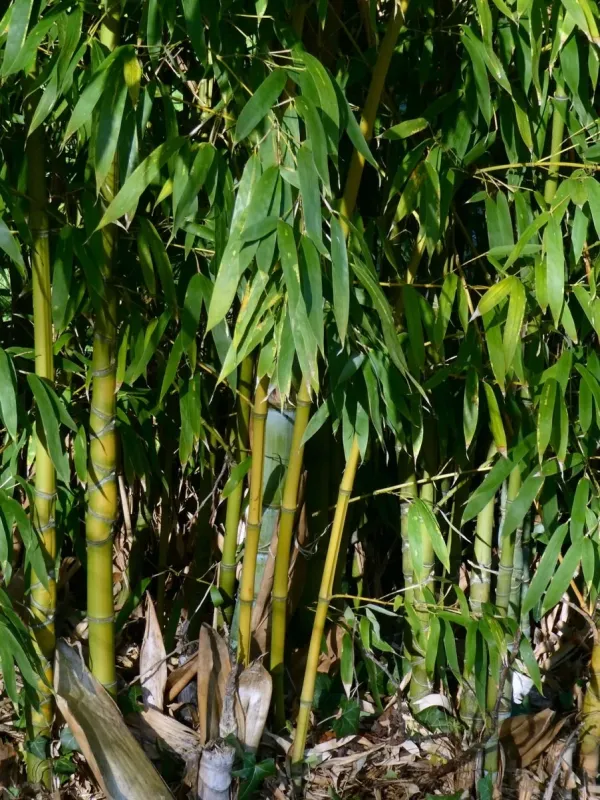
Botanically, this species is distinguished by its culms, which exhibit shortened, thickened internodes at the base, resembling a series of compressed rings. This unique trait makes it a sought-after ornamental plant in landscape architecture.
Beyond its aesthetic value, golden bamboo serves practical agricultural purposes. Its strong, flexible canes are harvested for use in fencing, furniture construction, and various artisanal crafts, making it a sustainable choice for small-scale production.
Main diseases and pests
The most significant environmental threat to golden bamboo is waterlogged soil, which encourages fungal pathogens and root decay. Proper field layout and irrigation management are essential to maintain plant health.
Common pests include spider mites and mealybugs, which are particularly prevalent in arid, hot conditions. These pests feed on plant sap, leading to yellowing leaves and reduced vigor if left untreated.
Integrated Pest Management (IPM) strategies, including the use of neem oil or targeted insecticides, are recommended when infestations exceed economic thresholds. Early detection remains the most effective control method.
Fungal leaf spot diseases can develop in stagnant, humid environments. Maintaining sufficient airflow by thinning out older, non-productive canes helps mitigate the spread of these infections significantly.
Climate-related threats include severe cold snaps that can kill back immature shoots. Protecting the root zone with a thick layer of mulch helps insulate the rhizomes and ensures vigorous regrowth in the following season.