
Yellow groove bamboo
Phyllostachys aureosulcata
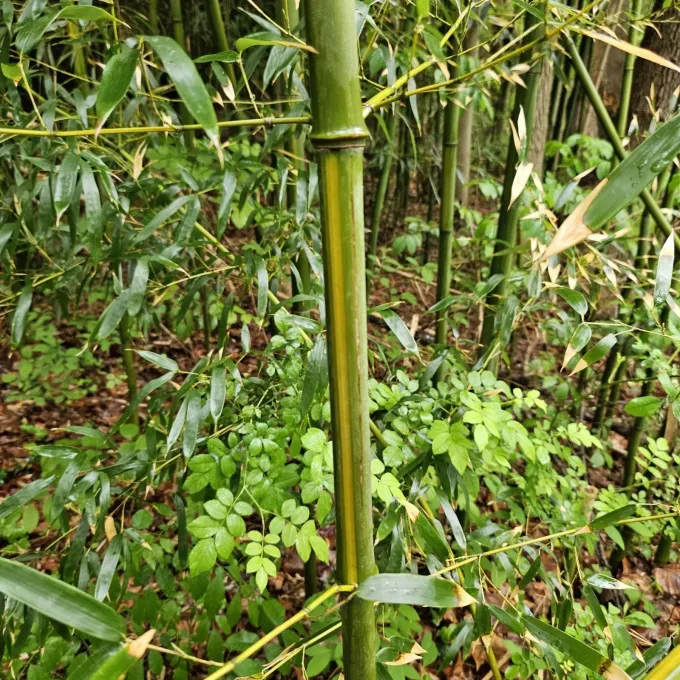
Description
Growing requirements
Phyllostachys aureosulcata, commonly known as yellow groove bamboo, is a robust member of the Poaceae family native to eastern China. It is highly valued for its striking green culms with a distinctive bright yellow groove, which makes it a popular choice for garden hedging.
This species is exceptionally cold-hardy for a bamboo, capable of surviving temperatures as low as -20 °C. For optimal growth, it requires deep, rich, and well-draining soil with a pH ranging from slightly acidic to neutral. Providing constant moisture is crucial during the active growing season.
Sunlight requirements for this bamboo include full sun to light shade. While it can tolerate various environments, it performs best when protected from harsh winter winds which can cause leaf desiccation. It prefers areas with high humidity but hates waterlogged soils.
Agricultural management involves regular fertilization during late spring to encourage the production of new culms. Nitrogen-rich fertilizers are most effective, as they promote vigorous leaf growth and strong stem development throughout the warmer months.
The root system of this species is rhizomatous and can be quite invasive. Cultivation plans must include the installation of a rhizome barrier made of high-density polyethylene, which should be buried at least 60 cm deep to prevent the bamboo from spreading beyond the designated area.
Main diseases and pests
Phyllostachys aureosulcata is generally a resilient plant, but it is not immune to certain pests. Spider mites are the most common issue, especially during hot and dry summer spells. Regular misting or the use of horticultural soap can help mitigate these infestations.
Bamboo aphids can occasionally target the new, soft shoots during the spring. If found in large numbers, they should be treated with biological controls or systemic insecticides to preserve the vitality of the new growth and ensure it hardens properly.
Fungal diseases like rust or leaf spot may occur if there is poor air circulation. Thinning out older, congested canes is recommended to improve airflow, which significantly reduces the risk of fungal proliferation within the stand.
Root rot is a major threat in soils with poor drainage. Once established, this condition is difficult to reverse, making the prevention of water stagnation the most critical part of managing this crop's health.
Frost damage can occur on the tips of new shoots if there is an unexpected cold snap in late spring. While the plant usually recovers, temporary protective covers can be used to prevent aesthetic damage to the newest, most vulnerable parts of the bamboo.