
Bisset's bamboo
Phyllostachys bissetii
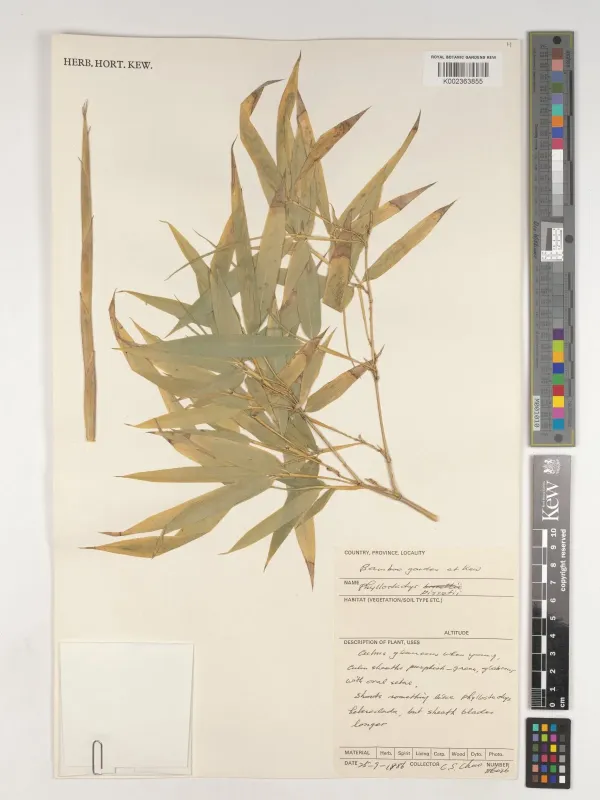
Description
Growing requirements
Phyllostachys bissetii, commonly known as Bisset's bamboo, is a member of the Poaceae family. Originating from Sichuan, China, it is highly regarded for its vigorous growth and exceptional cold hardiness.
This bamboo thrives in fertile, well-draining soils with a neutral or slightly acidic pH. It requires consistent moisture but is sensitive to waterlogged conditions that can cause root rot.
The plant is famously resilient, tolerating temperatures as low as -24°C (-11°F). This makes it an ideal choice for temperate regions where other bamboo species might struggle to survive winter.
Bisset's bamboo prefers full sun to partial shade. In exposed locations, it benefits from protection against harsh, drying winter winds which can cause leaf desiccation.
Agricultural maintenance involves regular watering during dry spells and applying organic mulch around the base to insulate the roots and maintain the necessary soil moisture levels.
Main diseases and pests
Phyllostachys bissetii is generally resistant to pests and diseases, but improper site conditions can lead to fungal issues like powdery mildew in poorly ventilated areas.
Spider mites are the most common pests, often appearing in hot, dry weather if the plant is not properly hydrated, leading to leaf discoloration and weakened growth.
While serious infestations are rare, monitoring for aphids on new shoots is recommended during the spring growth phase to ensure optimal development of the canes.
The primary concern for growers is the invasive nature of the running rhizomes; therefore, installing root barriers is a standard agricultural requirement for containment.
Effective management includes clearing out dead or damaged culms annually, which improves the overall health of the stand and prevents the build-up of debris and pests.
Harvesting
The primary economic and landscape use of Bisset's bamboo is for creating dense privacy screens, windbreaks, and erosion control along property boundaries.
The culms (stems) are harvested for use in artisanal crafting, furniture making, and agricultural supports, valued for their durability and structural flexibility.
Harvesting is typically performed during the dormant winter season, which results in harder, more durable canes that are less susceptible to pests after processing.
Sustainable harvesting involves selecting only the mature culms, leaving younger shoots to reach maturity, which ensures the long-term productivity of the bamboo stand.
In addition to structural uses, the leaf biomass serves as an excellent mulch or soil amendment, contributing significant organic matter back into the cultivation system.