
Incense Bamboo
Phyllostachys atrovaginata
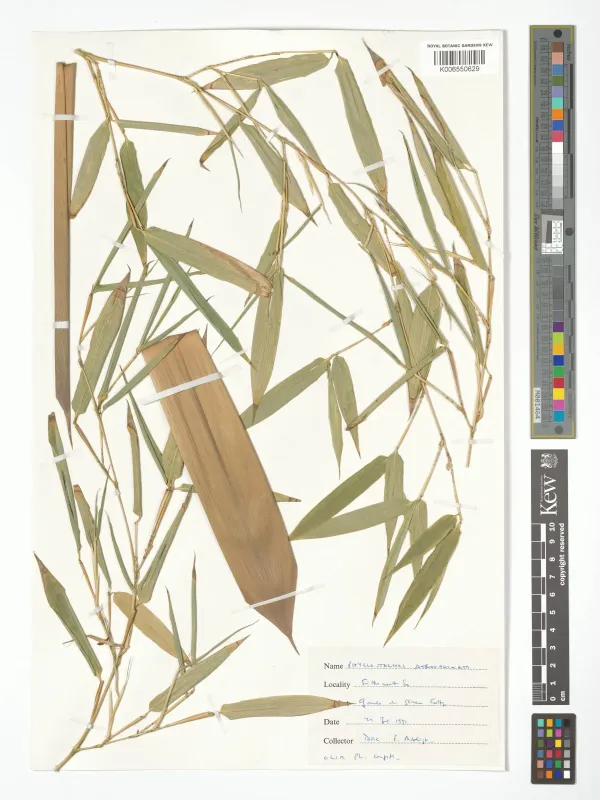
Description
Growing requirements
Incense Bamboo, scientifically known as Phyllostachys atrovaginata, is a robust species within the Poaceae family. This bamboo is famous for its unique ability to grow in wet soils where other species would suffer from root suffocation.
Originating from China, the species thrives in humid subtropical regions. It is highly valued for its aromatic rhizomes, which emit a fragrance when rubbed, and its straight, sturdy culms that are excellent for utility purposes.
The crop requires fertile, moisture-retentive, and well-draining soil. While it is tolerant of temporary flooding, it performs best in soils with high organic content. Sun exposure is crucial, as the plant needs sufficient light to develop its full height and structural density.
Management of this bamboo involves installing rhizome barriers, as it is a vigorous runner. Fertilization with nitrogen-rich compounds during the peak growth season significantly increases the annual yield of new shoots.
The main uses include sustainable timber production, edible shoot harvest, and erosion control. Its resilience to low temperatures, down to approximately -20°C, makes it suitable for various temperate climates.
Main diseases and pests
Phyllostachys atrovaginata is generally hardy, but it can be susceptible to leaf spot diseases in stagnant air conditions. Proper spacing between plants is essential to allow airflow and minimize moisture buildup on foliage.
Insect pests such as spider mites and aphids are the most common threats. Integrated pest management (IPM) practices, including the use of predatory insects or targeted horticultural oils, are recommended for maintaining plantation health.
Bacterial wilt or soft rot may occur if the planting site is severely waterlogged for extended periods. Even though this species loves moisture, deep standing water should be avoided to prevent root system degradation.
Rodents can sometimes damage the young rhizomes or base of the culms during winter. Protective measures such as wire mesh or site clearing can prevent significant damage to the crop.
Regular monitoring for nutrient deficiencies, particularly iron or magnesium chlorosis, is important to ensure deep green leaf color and high photosynthetic efficiency throughout the growing season.
Harvesting
The harvest of edible shoots begins when they emerge from the ground, typically in the spring season. Shoots must be cut carefully just below the soil surface to avoid damaging the dormant buds on the rhizome.
Timber harvest involves selecting mature culms, usually those that are 3 to 5 years old. Harvesting at this stage ensures the culms have reached their maximum strength and durability for construction.
Cutting should be performed with sharp, sterilized tools to ensure a clean break and reduce the risk of introducing pathogens into the remaining plant structure.
After harvesting timber, it is important to treat the culms to preserve them against humidity and potential insect infestation. Proper drying techniques are necessary to prevent cracking of the bamboo wood.
Consistent harvesting of older culms promotes the growth of new, stronger shoots, thereby maintaining the productivity and structural integrity of the entire bamboo grove.