
Meyer bamboo
Phyllostachys meyeri
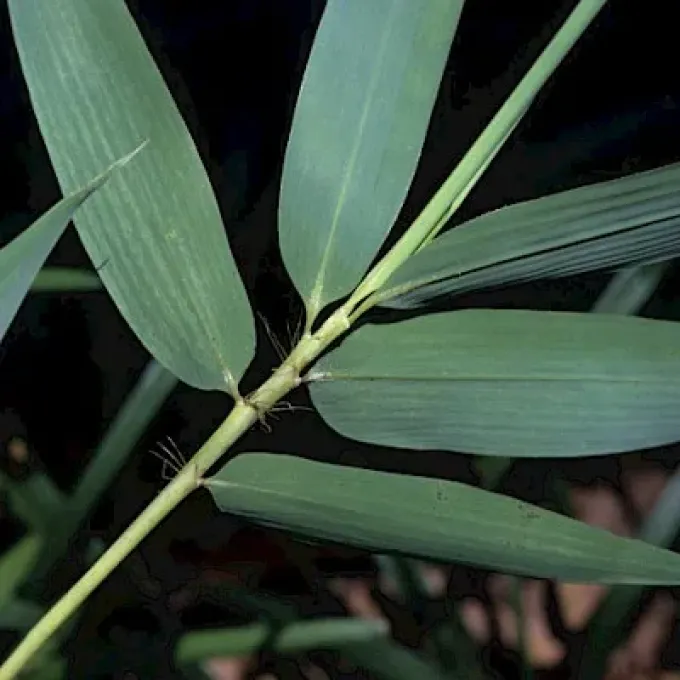
Description
Growing requirements
Meyer bamboo (Phyllostachys meyeri) is a perennial woody plant belonging to the grass family (Poaceae) and the genus Phyllostachys. This species is a tall, running bamboo capable of forming dense groves through an aggressive system of underground rhizomes.
Originating from China, the plant is traditionally utilized in both forestry and landscape architecture. In cultivation, this species adapts well to temperate climates, enduring short periods of low temperatures, although it prefers regions with mild winters.
For successful growth, the plant requires deep, loose, and fertile soils with a neutral or slightly acidic pH. Good drainage is essential, as waterlogged conditions in the root zone can lead to rhizome rot and stunted development.
The culture has high requirements for air and soil moisture, especially during the peak vegetative growth phase. In dry periods, regular irrigation is necessary to ensure that the culms (stems) reach their maximum height and wood density.
These bamboo plantings prefer areas protected from harsh, cold winds. Optimal lighting conditions include partial shade or filtered light, although mature plants can tolerate full sun provided the soil moisture is consistently maintained.
Yield
The agricultural utility of Meyer bamboo is focused on the production of durable and flexible timber. Its culms are used in construction, furniture manufacturing, and various craft industries. The stems of this species are noted for their straightness and structural integrity.
In industrial cultivation, yield is measured by the biomass produced per unit area. A well-managed plantation allows for annual selective harvesting of mature culms without compromising the long-term health and productivity of the bamboo grove.
While the young shoots of some bamboo species are edible, the primary focus for Phyllostachys meyeri remains the production of raw woody material. The density and strength of the culms make them highly sought after for framing and decorative elements.
The efficiency of the plantation depends on proper spacing and management of the rhizome system. Optimized land usage involves controlled expansion of the grove to maintain the quality characteristics of the stems over many years.
Beyond timber production, bamboo plantations contribute significantly to soil stabilization. This makes the species an excellent candidate for restoring slopes prone to erosion, effectively turning degraded land into productive agricultural assets.
Main diseases and pests
Meyer bamboo exhibits high resistance to many common woody grass diseases. However, when agricultural practices are neglected, especially under conditions of excessive moisture, roots can become vulnerable to fungal pathogens that lead to culm wilting.
Regarding pests, the greatest threats are sap-sucking insects such as aphids and spider mites, which typically attack young leaves during hot, dry weather. Their activity can significantly reduce the growth energy and visual quality of the plantings.
Control strategies include regular sanitary pruning of old or diseased culms, which improves air circulation within the grove. In cases of severe infestation, timely application of biological or chemical insecticides is recommended to manage the pest population.
Disease prevention is largely achieved by maintaining optimal planting density. Overcrowded groves create an ideal microclimate for pest proliferation due to stagnant air and high humidity levels trapped within the thickets.
Monitoring soil health and applying balanced fertilizers regularly enhance the bamboo’s natural immunity, making it more resilient against external environmental stressors and pathogen attacks.