
Hairy Mistletoe
Phoradendron villosum
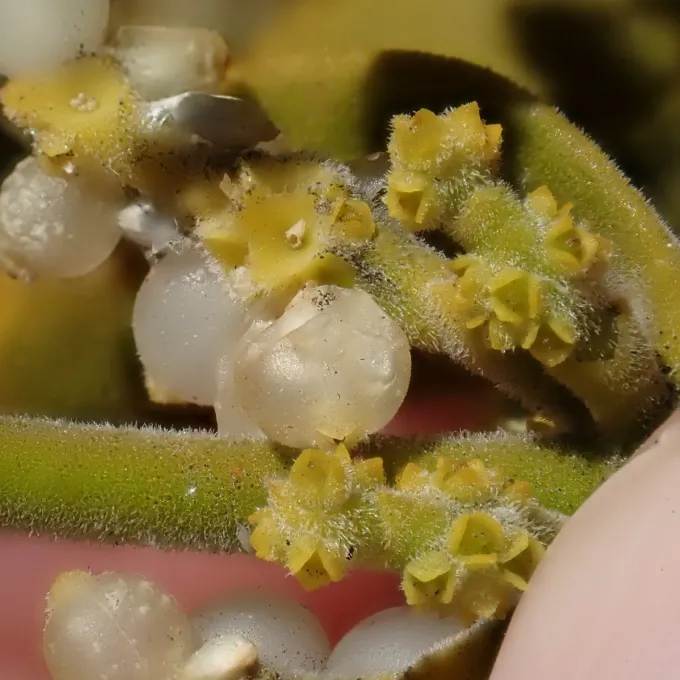
Description
Growing requirements
Phoradendron villosum, commonly known as the hairy mistletoe, is a perennial hemiparasitic plant belonging to the Santalaceae family. It is distinct due to its dense covering of fine, short hairs, which helps regulate its water balance.
This species is native to western North America, ranging from Oregon southwards to Mexico. It thrives in diverse climates, specifically in woodlands where various oak species are present, serving as the primary hosts for its development.
The plant does not possess roots in the traditional sense. Instead, it utilizes specialized structures called haustoria to penetrate the bark of the host tree and extract water and essential nutrients directly from the xylem vessels.
In terms of light requirements, the hairy mistletoe is heliophilic, meaning it prefers exposed areas of the host tree canopy. Proper exposure ensures sufficient energy for photosynthetic activity during the growing season.
Management of this species in forestry involves monitoring tree health. While it contributes to local biodiversity, excessive infestation can place significant stress on the host tree, often necessitating pruning of the affected branches.
Main diseases and pests
The primary vector for the dispersal of Phoradendron villosum seeds is local avian populations. Birds consume the berries and deposit the sticky seeds onto other branches, facilitating the expansion of the parasitic colony.
Major threats to the survival of this plant include the decline of host tree populations due to urbanization or disease. Furthermore, strict forest management practices designed to eliminate hemiparasites can severely reduce local population density.