
Phoradendron capitallatum
Phoradendron capitallatum
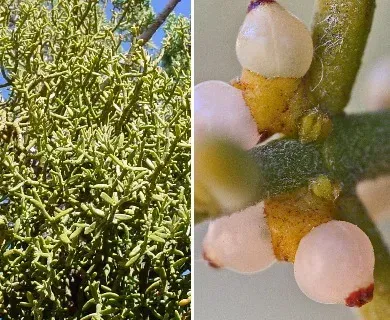
Description
Growing requirements
Phoradendron capitallatum is a notable species of hemiparasitic plant belonging to the Santalaceae family. In the context of forestry and arboriculture, it is classified as a botanical pest rather than a beneficial crop, requiring specific management to mitigate its impact on host trees.
Originating from regions across the Americas, this plant is naturally adapted to colonize the upper branches of various tree species. It relies on a specialized root-like structure called a haustorium to penetrate the host's xylem, drawing essential water and mineral nutrients directly from the tree's vascular system.
Botanically, Phoradendron capitallatum is characterized by its succulent, jointed stems and thick, coriaceous leaves. These adaptations allow the plant to maintain high water-use efficiency while surviving in highly exposed canopy environments where sunlight intensity is at its peak.
The climatic requirements for this species include consistent thermal ranges associated with tropical and subtropical zones. It thrives where atmospheric humidity is sufficient to support its active metabolism throughout the year, regardless of the seasonal fluctuations in the host's vigor.
Regarding cultivation-like management, there are no specific soil requirements as the plant remains aerial throughout its lifecycle. Its success is entirely dependent on the physiological status of the host, making the selection of resistant tree species a key strategy in preventing natural infestations.
Main diseases and pests
The primary threat posed by Phoradendron capitallatum is the progressive decline of the host tree. By siphoning nutrients and water, the parasite weakens the tree's defensive systems, rendering it more susceptible to drought, secondary infections, and structural damage.
Management strategies focus on the removal of infested branches during dormant or early growth periods. It is critical to prune deep enough into the host wood to remove the primary haustorial connection; otherwise, the parasite will likely regenerate from the remaining tissue.
Bird-mediated seed dispersal represents a significant challenge for control. The berries, which contain sticky viscin, are consumed by birds and deposited on healthy branches, creating new infection points that can quickly expand across a garden or woodland area.
Chemical control remains experimental and largely limited by the risk of damaging the host plant. Future management may involve targeted bio-rational products that selectively affect the metabolism of the parasitic plant without causing systemic stress to the host tree.
Integrated Pest Management (IPM) practices for this species emphasize early detection. Regular inspections of the canopy are vital to ensure that infestations are addressed before the parasite reaches a reproductive stage, which significantly limits the risk of further spreading within the ecosystem.