
Phoradendron piperoides
Phoradendron piperoides
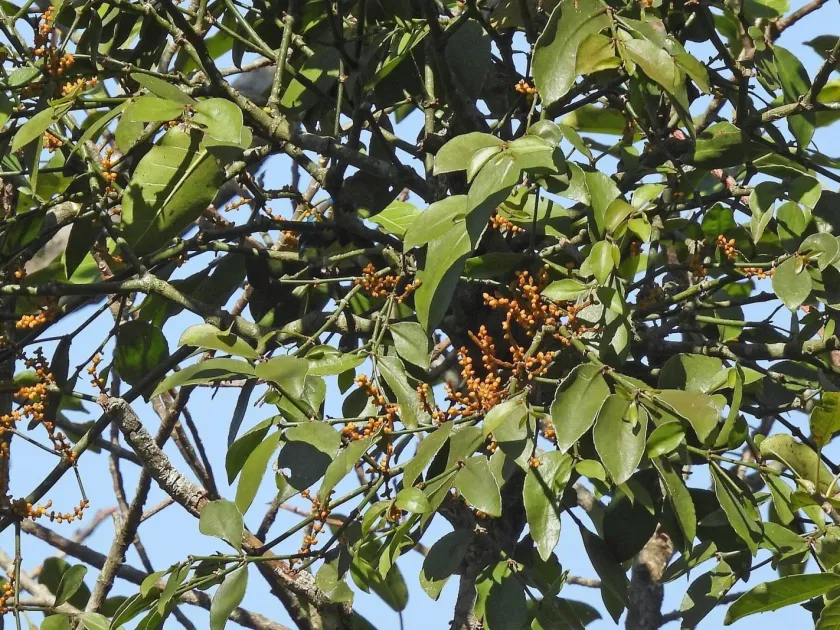
Description
Growing requirements
Phoradendron piperoides is a hemiparasitic plant belonging to the Santalaceae family. It is widely distributed across the tropical and subtropical regions of the Americas, commonly found growing as an epiphyte on the branches of host trees.
This species is highly adapted to its parasitic lifestyle, utilizing specialized structures called haustoria. These organs penetrate the bark and xylem of the host to extract essential water and mineral nutrients.
The plant thrives in humid forest environments. It requires significant light exposure to maintain high rates of photosynthesis, which is why it often occupies the canopy layers of its host trees.
Optimal growth conditions involve stable high temperatures and consistent humidity levels throughout the year. It exhibits very low tolerance for arid conditions, which restricts its range to specific moist biomes.
While not a traditional agricultural crop, it plays a complex role in the ecosystem. It provides food sources for various bird species that help disperse its seeds, thus continuing its life cycle.
Main diseases and pests
The plant faces pressure from various insect herbivores that have evolved to overcome the chemical and physical defenses present in its tissues.
Fungal pathogens represent a significant threat, particularly in environments with extremely high moisture levels, leading to tissue decay and potential loss of the host branch connection.
Inter-species competition within the tree canopy for limited sunlight can suppress the vigor of Phoradendron piperoides and limit its reproductive success.
Deforestation and the destruction of primary host trees directly threaten the stability of its local populations by removing the necessary substrate for growth.
In managed forestry systems, excessive colonization by Phoradendron piperoides may require mechanical removal to ensure the overall health and productivity of the host timber trees.