
Phoradendron californicum
Phoradendron californicum
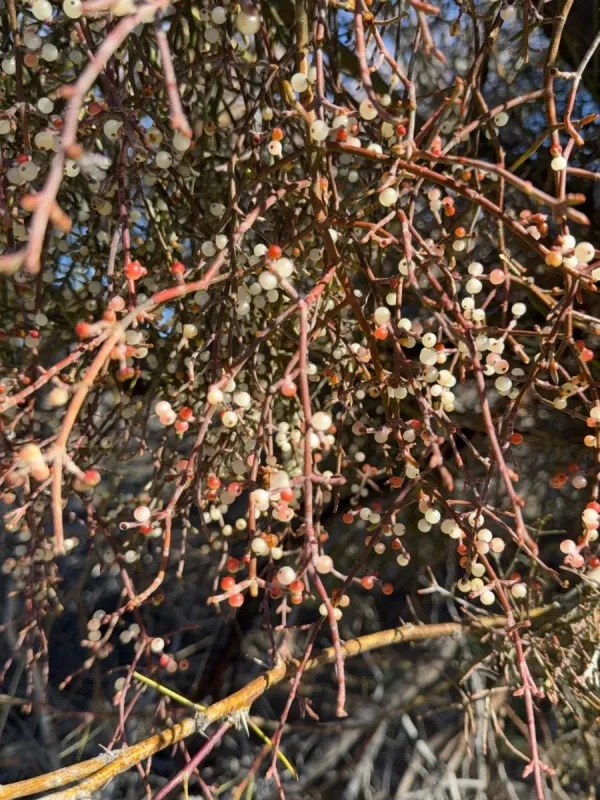
Description
Growing requirements
Phoradendron californicum, commonly known as desert mistletoe, is a hemiparasitic plant belonging to the Santalaceae family. It is native to the arid regions of the southwestern United States and Mexico, where it acts as a significant parasite on desert trees and shrubs.
Unlike standard agricultural crops, this species is considered a pest that extracts water and mineral nutrients from the xylem of its hosts. Typical hosts include species of Prosopis, Acacia, and Parkinsonia, which provide the essential structure for the mistletoe to thrive in harsh, hot climates.
Botanically, Phoradendron californicum is distinguished by its branched structure and small, inconspicuous leaves. It utilizes its green stems for photosynthesis, while its root-like structures, known as haustoria, penetrate the vascular tissue of the host plant to siphon off resources.
The ecological requirements for this species are strictly tied to its host range. It thrives in high-heat environments with scarce rainfall, utilizing the deep root systems of desert trees to access groundwater that the mistletoe could not reach independently.
From a management perspective, it represents a biological burden on vegetation. While it provides food for various birds in the desert ecosystem, its unchecked growth can significantly reduce the vitality of agricultural and ornamental woody plants.
Main diseases and pests
The primary threat posed by Phoradendron californicum is the long-term decline of infected host trees. Constant nutrient extraction causes branch dieback, reduced growth rates, and eventually, the death of the tree if the infestation is severe.
Controlling this parasite involves mechanical removal, which is the most effective method for smaller trees. Arborists recommend cutting the host branches several inches below the point of infection to ensure the complete removal of the internal haustorial system.
Chemical control programs are sometimes employed in professional agriculture, using growth regulators that cause the mistletoe to drop its leaves or induce abscission of the parasite. However, such treatments must be handled with care to avoid damage to the host.
Disease transmission is an indirect threat. Because the mistletoe creates openings in the host's bark and phloem, it often acts as an entry point for secondary wood-rotting fungi and other pathogenic bacteria, exacerbating the host's health issues.
Successful management relies on preventive maintenance, specifically irrigation management and regular sanitation pruning. By keeping the host trees healthy and vigorous, their natural defenses against parasitic encroachment are significantly enhanced.