
Phoradendron rubrum
Phoradendron rubrum
Description
Growing requirements
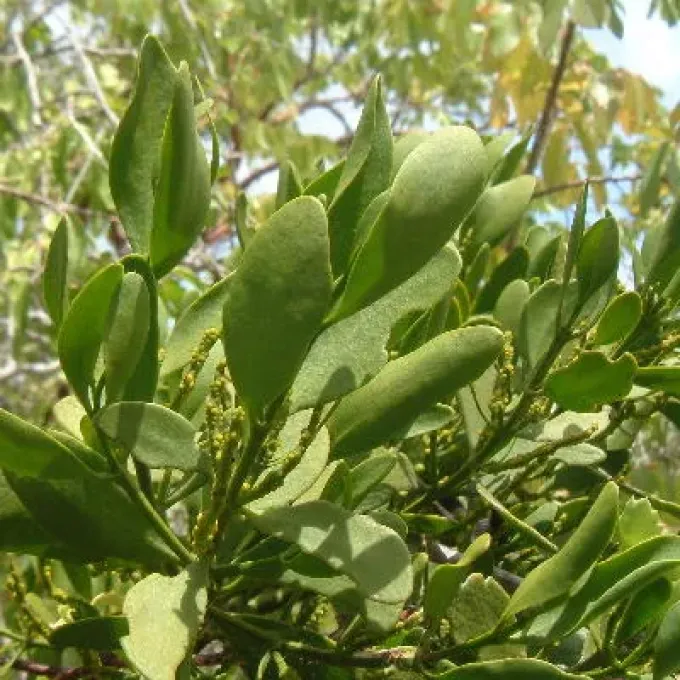
Phoradendron rubrum is a species of mistletoe belonging to the Santalaceae family. As a hemiparasitic shrub, it relies on host trees to obtain water and nutrients, although it retains the ability to perform photosynthesis through its green leaves.
The plant is native to the Caribbean region, with a particular concentration of its population found in Jamaica. It typically inhabits tropical forests, where it attaches itself to the branches of various host trees to maximize light exposure for growth.
Climate requirements for this species include high atmospheric humidity and consistently warm temperatures found in tropical environments. It does not grow in soil; its life cycle is entirely dependent on the structural integrity of the host trees it colonizes.
Botanically, the plant is characterized by its succulent, leathery leaves and distinctive small berries. These berries are essential for reproduction, as they are consumed and dispersed by birds that land on various trees, depositing seeds in the bark crevices.
Regarding its utility, Phoradendron rubrum is rarely cultivated intentionally. In many agricultural settings, it is viewed as a nuisance, as high densities of the parasite can weaken the host tree, reducing its fruit yield or timber quality if left unchecked.
Main diseases and pests
The primary threat to the survival of Phoradendron rubrum is habitat loss due to deforestation. As it requires specific host trees to survive, the reduction in canopy density directly impacts its ability to spread and maintain healthy populations.
There are few specific diseases that target this mistletoe directly. However, it can be affected by a decrease in bird populations, which are the exclusive vectors for its seed dispersal. Without these avian dispersers, the plant's spread is severely limited.